







What's Happening?
The global sovereign AI infrastructure market is experiencing rapid growth, with projections indicating it will reach $391.2 billion by 2036, up from an estimated $80 billion in 2026. This significant expansion is driven by national security concerns,
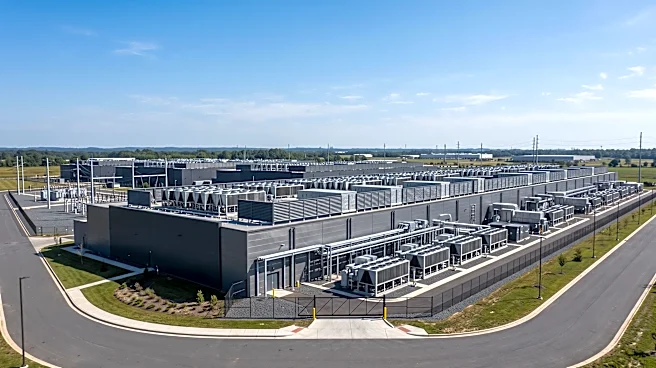
strategic autonomy, data protection, and industrial competitiveness. Governments worldwide increasingly view AI computing capacity as essential for defense, intelligence, cybersecurity, public administration, critical infrastructure, and the preservation of national languages and culture. The Middle East & Africa region is expected to register the highest regional Compound Annual Growth Rate (CAGR), with Gulf states heavily investing in AI infrastructure to diversify their economies and establish global technology hubs. Projects like Stargate UAE, aiming for 200 megawatts online by 2026, and Humain in Saudi Arabia, targeting 6.6GW of data center capacity over the next decade, exemplify this trend. North America's growth is supported by U.S. national laboratory systems and federal AI programs.
Why It's Important?
The surge in sovereign AI infrastructure investment signifies a global recognition of AI's strategic importance, moving beyond purely commercial applications to national interests. This trend has profound implications for international relations, economic development, and technological sovereignty. Countries are investing to ensure control over their data, protect national security, and foster domestic innovation, reducing reliance on foreign technology providers. This could lead to a more fragmented global AI landscape, with different nations developing their own AI ecosystems. For the U.S., continued investment in its national laboratory systems and federal AI programs is crucial to maintain its competitive edge and influence global AI standards. The competition for AI talent and resources will intensify, potentially leading to shifts in global labor markets and educational priorities. The emphasis on national language models also highlights a cultural dimension, aiming to preserve linguistic diversity in the age of AI.
What's Next?
The market is expected to see continued growth in public-private partnerships and national champion initiatives, combining government support with private capital and global technology collaborations. Sovereign cloud models, which provide locally controlled infrastructure, are forecast to be the fastest-growing deployment model, particularly for regulated industries. Governments will likely continue to prioritize investments in compute hardware, such as GPUs and accelerators, as the initial phase of national AI programs. However, software and platforms are projected to have the highest CAGR as countries deploy sovereign cloud layers and AI development environments. Challenges such as high capital costs, limited public budgets, shortages of skilled AI engineers, and power availability will need to be addressed. Export controls on advanced accelerators will also continue to influence market development, with some countries increasingly relying on domestic chip production.
Beyond the Headlines
The drive for sovereign AI infrastructure extends beyond mere technological capability; it reflects a deeper geopolitical struggle for power and influence in the 21st century. The concept of 'AI sovereignty' implies not just control over data and algorithms, but also the ability to shape the ethical, legal, and societal norms governing AI. This could lead to divergent AI development paths globally, with different countries prioritizing different values and regulatory approaches. The massive energy requirements of these AI facilities also raise significant environmental concerns, pushing for greater investment in renewable energy and sustainable data center practices. Furthermore, the focus on national security and defense applications of AI could accelerate an AI arms race, necessitating international dialogues on responsible AI use and arms control. The long-term impact will reshape global supply chains, trade relationships, and the very nature of national power.