






What's Happening?
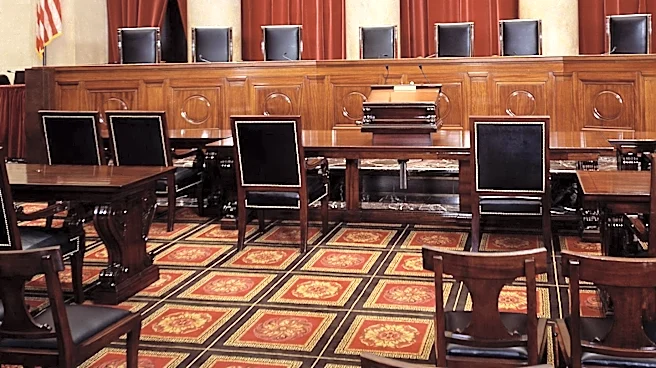
Congressman Jim Clyburn (D-SC) has publicly stated his support for expanding the Supreme Court from nine to thirteen justices. This announcement comes after Clyburn admitted on 'Meet the Press' that his 1991 endorsement of then-nominee Clarence Thomas
for the Supreme Court was a 'mistake.' Clyburn, who served as a character witness for Thomas during his confirmation hearings, expressed that he 'had no idea that Clarence Thomas would rebel the way he has against his own background and experiences.' He cited Thomas's actions on the bench, including the erosion of civil rights protections, challenges to voting rights and affirmative action, and his concurrence in the Dobbs decision, as reasons for his change of heart. Clyburn believes that the current situation necessitates 'significant actions taken by the Congress' and that expanding the court to thirteen justices would be a 'good number.'
Why It's Important?
Congressman Clyburn's call for Supreme Court expansion is significant as it reflects a growing sentiment among some Democratic leaders and a majority of Americans who are reportedly open to the idea. His admission of error regarding Justice Thomas highlights the long-term impact of judicial appointments on civil rights and constitutional interpretations. The proposal to expand the court, also previously supported by Kamala Harris and now described by House Minority Leader Hakeem Jeffries as 'dramatic Supreme Court reform,' underscores a deep partisan divide over the judiciary's role and composition. This move could fundamentally alter the balance of power within the Supreme Court, potentially shifting its ideological leanings and influencing future rulings on critical social and legal issues. The debate over court packing raises questions about judicial independence and the stability of the American legal system.
What's Next?
The proposal to expand the Supreme Court faces significant hurdles, requiring agreement from the House, the Senate, and the White House. While a majority of Americans are reportedly on board with adding seats, the political feasibility of such a measure is complex. Should Democrats gain sufficient control of all three branches of government, court expansion could become a legislative priority. However, the source notes a potential cyclical problem: any number of justices chosen by one party could be further expanded by the opposing party when they next gain power, potentially leading to an ever-growing court. This suggests that any immediate action is unlikely without a substantial shift in the political landscape. The discussion will likely continue to be a prominent feature in political discourse and future election campaigns.
Beyond the Headlines
The debate surrounding Supreme Court expansion delves into fundamental questions about the nature of American democracy and the judiciary's role. Clyburn's personal reflection on his past endorsement of Justice Thomas highlights the long-term consequences of judicial appointments and the evolving understanding of a justice's impact. The concept of 'court packing' has historical precedents and raises concerns about politicizing the judiciary, potentially undermining its perceived impartiality and public trust. The ongoing erosion of civil rights protections, as cited by Clyburn, underscores the profound societal implications of Supreme Court decisions. This discussion is not merely about the number of justices but about the very interpretation of the Constitution and the future direction of American law and society.