
What's Happening?
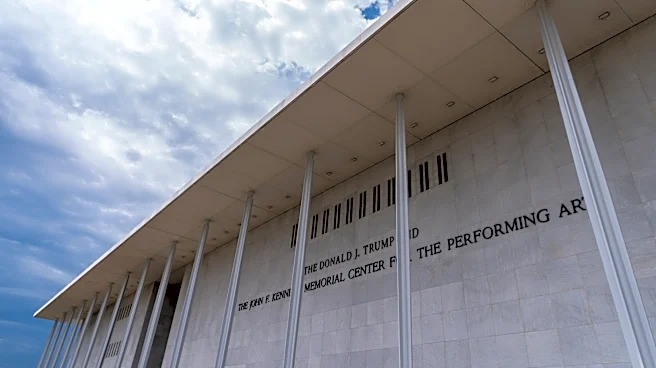
A U.S. District Judge, Christopher Cooper, has ordered the removal of President Donald Trump's name from the Kennedy Center and halted planned renovations. The judge ruled that the Kennedy Center's board
of trustees acted illegally by voting to add Trump's name to the building. The decision also blocks the center from closing for a two-year renovation, which was set to begin on July 4, 2026. President Trump criticized the ruling, arguing that the renovations were necessary due to the center's structural issues. He announced plans to transfer control of the Kennedy Center to Congress, allowing them to decide its future. The ruling came after a lawsuit filed by U.S. Rep. Joyce Beatty, which cited a 1964 federal law establishing the center's name as the John F. Kennedy Center for the Performing Arts.
Why It's Important?
This ruling has significant implications for the management and future of the Kennedy Center, a major cultural institution in Washington, D.C. The decision underscores the legal boundaries of the board's authority and highlights the ongoing political tensions surrounding President Trump's initiatives. The halt in renovations could impact the center's operations and financial health, as Trump claimed the center has been losing millions annually. The transfer of control to Congress could lead to changes in how the center is managed and funded, affecting stakeholders in the arts community and potentially altering the center's role in U.S. cultural life.
What's Next?
The Kennedy Center plans to appeal the judge's ruling, which could lead to further legal battles. If the transfer to Congress proceeds, it may result in legislative discussions about the center's future management and funding. Stakeholders, including the arts community and political leaders, will likely engage in debates over the center's direction and the implications of federal oversight. The outcome of these developments could set precedents for how cultural institutions are managed and funded in the U.S.