





What's Happening?
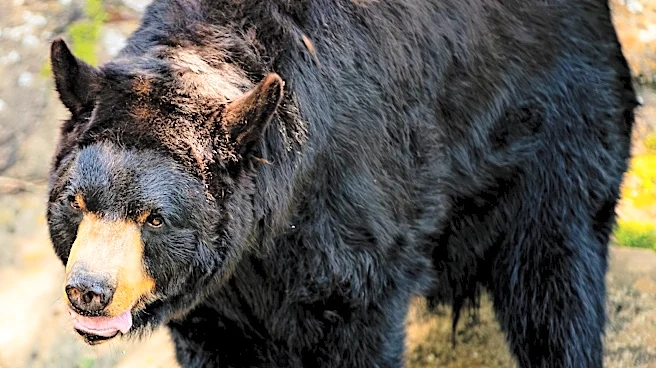
Residents in north Asheville, North Carolina, are taking increased measures to deter black bears after a recent incident where a bear entered a home, captured on a security camera. Whit Alexander, the homeowner, discovered the bear inside her residence
while her pets were home. This incident follows another recent event on August 18 where a bear injured a north Asheville resident. The bear involved in Alexander's home intrusion has been active in the neighborhood, reportedly crawling under porches, growling at a child, and accessing dog treats from a neighbor's porch. The North Carolina Wildlife Resources Commission (NCWRC) has advised residents to secure trash and pet food and remove bird feeders when bears are active. Alexander's family has stopped using their doggy door and has installed 'unwelcome mats'—plywood slabs with nails—on their back deck as a deterrent.
Why It's Important?
The increasing frequency of bear encounters in residential areas of north Asheville highlights a growing wildlife management challenge in urban-adjacent regions across the U.S. This situation poses significant safety concerns for residents and their pets, as evidenced by the recent injury and home intrusion. The need for residents to implement aggressive deterrents like 'unwelcome mats' indicates a breakdown in the natural separation between wildlife and human habitats. This issue is important because it reflects broader ecological shifts, such as habitat encroachment and changes in bear foraging behaviors, potentially driven by human development and food availability. It also places a burden on local wildlife agencies to manage these interactions, balancing public safety with wildlife conservation. The community's response underscores the tension between coexisting with wildlife and ensuring human security.
What's Next?
The North Carolina Wildlife Resources Commission will likely continue to educate the public on 'BearWise' practices, emphasizing securing attractants like trash and pet food. Residents in affected areas are expected to maintain vigilance and implement recommended deterrents. There may be increased discussions within the community and with local authorities about long-term strategies for managing bear populations in residential zones, potentially including stricter enforcement of wildlife-attractant ordinances or community-wide initiatives. The ongoing presence of bears could lead to further incidents, prompting calls for more interventionist measures from wildlife officials, such as trapping and relocating problem bears, though this often presents its own set of challenges. The community will need to develop a comprehensive plan to ensure both human and bear safety.
Beyond the Headlines
The bear incidents in Asheville point to a deeper ecological and societal issue: the increasing interface between human development and natural wildlife habitats. As urban areas expand, wildlife corridors shrink, forcing animals like black bears into closer contact with human populations. This situation raises ethical questions about human responsibility in managing these interactions and the long-term sustainability of urban growth. It also highlights the importance of public education on wildlife behavior and the need for proactive measures to prevent conflicts, rather than reactive responses. The community's struggle to coexist with bears reflects a broader challenge faced by many U.S. communities located near natural environments, necessitating a reevaluation of land use planning and wildlife conservation strategies to foster a more harmonious coexistence.