






What's Happening?
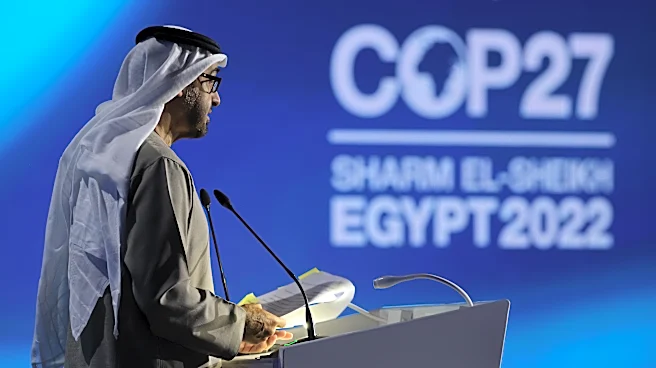
An annual climate meeting is set to take place in Antalya, Türkiye, bringing together over 60,000 participants including state parties, civil society, the private sector, faith leaders, scientists, and technical experts. This year's conference is being
described as an 'implementation' summit, indicating a focus on putting existing climate agreements into action rather than negotiating new breakthroughs. The Managing Director of Campaigns and Networks at 350.org, Savio, highlighted that the meeting serves as a crucial forum for discussion, negotiation, and signaling future directions in climate policy, despite past instances of both successes and disappointments. The conference occurs at the close of a year marked by geopolitical conflicts, high costs of living, and warnings about rising global temperatures, underscoring the urgency of climate action.
Why It's Important?
The emphasis on 'implementation' at this climate conference signals a shift from policy formulation to practical execution, which is critical for addressing the escalating climate crisis. For the U.S., this means potential implications for domestic energy policies, investments in renewable energy, and international climate cooperation. The global nature of the discussions could influence U.S. diplomatic efforts and its role in global climate finance. The ongoing 'cost-of-living crisis' and geopolitical instability mentioned in the context of the conference highlight the interconnectedness of economic stability, national security, and climate action. The outcomes of such international gatherings often shape the global narrative around climate responsibility, potentially influencing public opinion and corporate strategies within the U.S. regarding sustainability and energy transition.
What's Next?
The conference aims to address the 'cost-of-living crisis' and the necessity of transitioning away from fossil fuels towards renewable energy sources like solar and wind. This transition is envisioned to be just, equitable, and orderly, requiring some countries to overhaul their economies, retrain their workforces, and reallocate investments. While the source does not explicitly detail specific U.S. actions, the discussions and agreements made at this international forum could set precedents or create pressures for the U.S. to accelerate its own clean energy initiatives and contribute to global climate finance. The focus on electrification as a solution suggests potential for increased U.S. investment and innovation in this sector, impacting industries and job markets.
Beyond the Headlines
The framing of the conference as an 'implementation' summit, rather than a 'miracle' summit, reflects a growing realism within international climate negotiations. This pragmatic approach acknowledges the complexities of transitioning entire economies and the need for concrete, actionable steps. The mention of 'greed and seductive dependency on fossil fuels' points to deeper ethical and systemic challenges that extend beyond mere policy adjustments. For the U.S., this implies a need to confront entrenched economic interests and societal habits tied to fossil fuels. The discussions around a 'just, equitable and orderly' transition highlight the social justice dimensions of climate change, suggesting that future U.S. climate policies will increasingly need to consider the impact on workers and communities dependent on traditional energy sectors, ensuring that the shift to clean energy does not exacerbate existing inequalities.