
What's Happening?
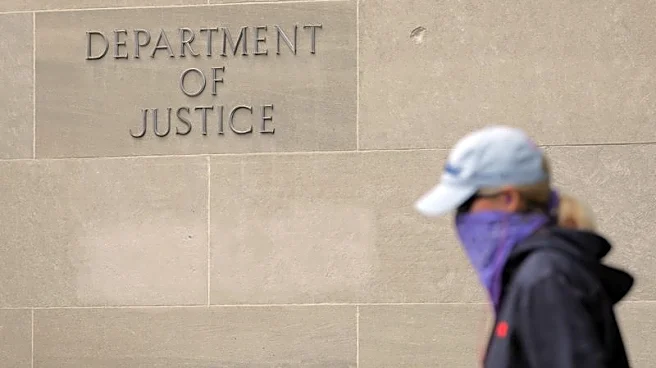
The U.S. Department of Justice (DOJ) has accused Yale University's medical school of illegally considering race in its admissions process. This accusation follows a Supreme Court ruling in 2023 that banned
affirmative action in college admissions. The DOJ's investigation found that Black and Hispanic students had a higher chance of admission compared to white and Asian students, despite having lower academic scores. The DOJ claims that Yale's continued use of race in admissions violates Title VI of the Civil Rights Act of 1964, which prohibits discrimination. The department is seeking a voluntary resolution with Yale but has indicated it may pursue legal action if compliance is not achieved. This development is part of a broader effort by the current administration to eliminate race-based admissions practices in higher education.
Why It's Important?
The DOJ's actions against Yale highlight the ongoing national debate over affirmative action and race-based admissions policies. The Supreme Court's 2023 decision has set a precedent that could significantly impact how universities across the U.S. approach diversity in their admissions processes. The outcome of this case could influence public policy and legal standards regarding educational equity and access. Institutions that have relied on race as a factor in admissions may need to reassess their policies to avoid legal challenges. This situation underscores the tension between efforts to promote diversity and the legal constraints imposed by recent judicial decisions.
What's Next?
Yale University may need to negotiate with the DOJ to reach a resolution that aligns with federal law. If a voluntary agreement is not reached, the DOJ could take legal action to enforce compliance. Other universities are likely to closely monitor this case, as its outcome could set a precedent for how race can be considered in admissions. The broader implications for higher education institutions include potential policy revisions and increased scrutiny of admissions practices. Stakeholders in the education sector, including policymakers and civil rights groups, may engage in further discussions and advocacy related to diversity and inclusion in academia.