






What's Happening?
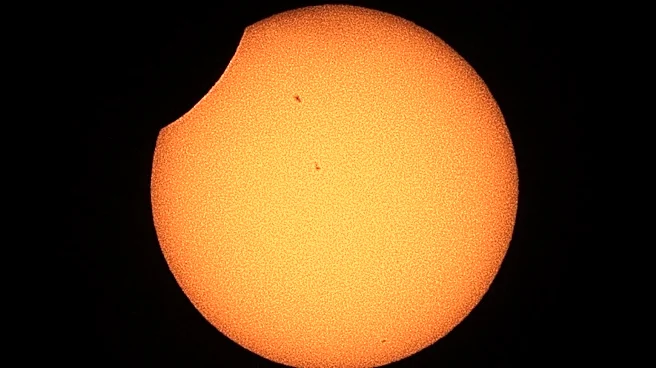
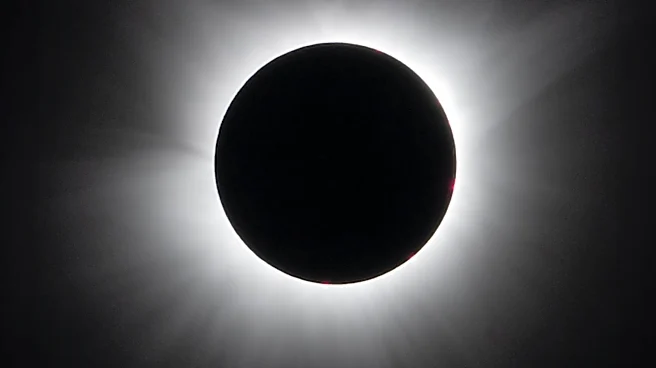
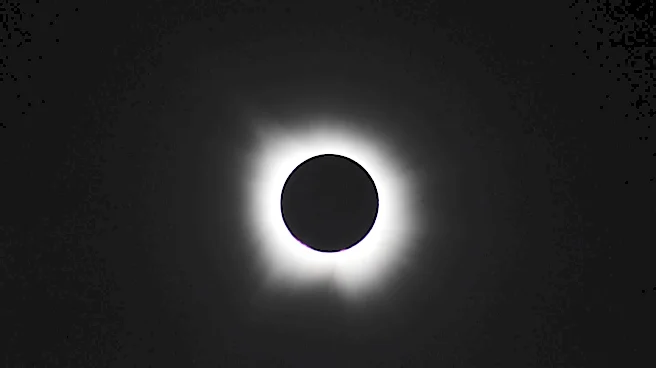
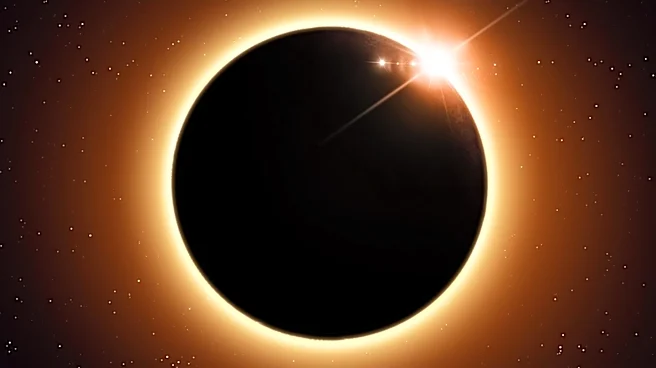
NASA has announced its plans to provide comprehensive coverage of the total solar eclipse occurring on August 12, 2026. The eclipse will be visible in parts of Greenland, Iceland, northern Russia, the Atlantic Ocean, Spain, and a small corner of Portugal.
NASA will stream the event live, featuring views from across the eclipse path and interviews with experts. In addition to the live stream, NASA will conduct scientific experiments during the eclipse. A NASA-funded team will use a WB-57 high-altitude research aircraft to study the Sun's corona by following the Moon's shadow. The Nationwide Eclipse Ballooning Project, supported by NASA, will involve students from U.S. universities launching scientific balloons in Iceland and Spain to study atmospheric changes during the eclipse.
Why It's Important?
The total solar eclipse presents a unique opportunity for scientific research and public engagement. By studying the Sun's corona, scientists can gain insights into solar dynamics that are not possible under normal conditions. The experiments conducted during the eclipse could lead to a better understanding of solar phenomena and their effects on Earth's atmosphere. Additionally, NASA's live coverage and educational outreach efforts aim to engage the public and inspire interest in space science. The event also highlights international collaboration, as students and researchers from various countries participate in the scientific activities.
What's Next?
Following the eclipse, NASA will analyze the data collected from the experiments to enhance understanding of solar and atmospheric science. The agency will also release photographs and other media from the event, which will be available on NASA's Flickr account. Public engagement will continue through social media platforms, where NASA experts will address questions and share insights. The findings from the eclipse research may inform future studies and missions related to solar and atmospheric science.