



What's Happening?
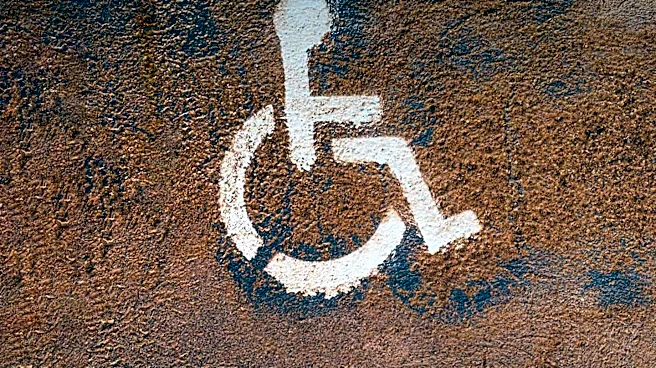
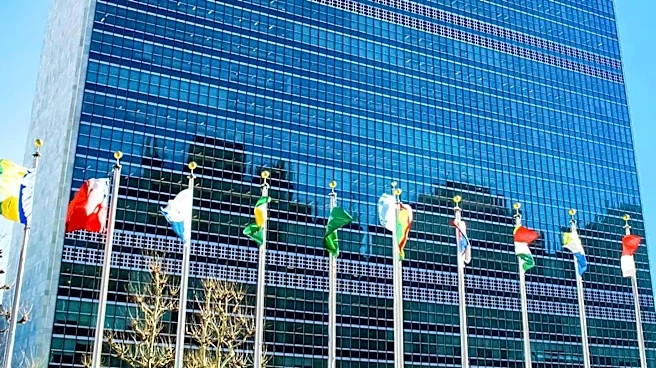
The concept of disability as a form of human diversity is gaining recognition, emphasizing that human bodies and minds vary, and public life should accommodate this variation. While the United Nations adopted a convention in 2006 to accept 'persons with
disabilities' as part of human diversity, the U.S. signed it in 2009 but has yet to ratify it, falling short of the required two-thirds Senate majority in 2012. This delay highlights ongoing challenges in the U.S. regarding accessibility and inclusion, with examples like the Metropolitan Transportation Authority in New York committing to making only 95% of its inaccessible subway stations accessible by 2055. The discussion underscores that true inclusion requires not just policy but also practical implementation and a shift in societal default assumptions.
Why It's Important?
The failure of the U.S. to ratify the UN convention on the rights of persons with disabilities signifies a missed opportunity to formally align with international standards for inclusion and accessibility. This impacts millions of Americans with disabilities by potentially slowing down progress on critical infrastructure and policy changes. The ongoing struggles with accessible public transport, such as in New York City, demonstrate that despite legal frameworks like the Americans with Disabilities Act, the practical realities often fall short. This affects disabled individuals' ability to participate fully in society, access employment, education, and essential services, leading to economic and social disadvantages. The 'curb-cut effect' illustrates that changes made for disabled people often benefit everyone, suggesting that broader adoption of inclusive design could yield widespread societal advantages.
What's Next?
Advocacy groups and individuals will likely continue to press for the ratification of the UN Convention on the Rights of Persons with Disabilities in the U.S. Simultaneously, efforts will focus on enforcing and expanding existing domestic legislation, such as the Americans with Disabilities Act, to ensure practical accessibility in public spaces, transportation, and digital platforms. This includes holding entities accountable for meeting accessibility deadlines and investing in inclusive design from the outset rather than as an afterthought. The ongoing dialogue will also likely emphasize shifting societal perceptions to view disability not as a deficit but as a natural aspect of human diversity, fostering a more inclusive and equitable society.
Beyond the Headlines
The discussion around disability as human diversity challenges fundamental societal norms and the 'default' assumptions about who constitutes a typical citizen. It moves beyond a medical model of disability, which focuses on individual impairment, to a social model that highlights systemic barriers and societal exclusion. This perspective encourages a re-evaluation of urban planning, technological design, and public services to proactively accommodate a wider range of human experiences. The ethical implications extend to recognizing the inherent dignity of every individual, regardless of ability, and ensuring that policies and infrastructure reflect a commitment to universal participation rather than merely providing accommodations as exceptions.