


What's Happening?
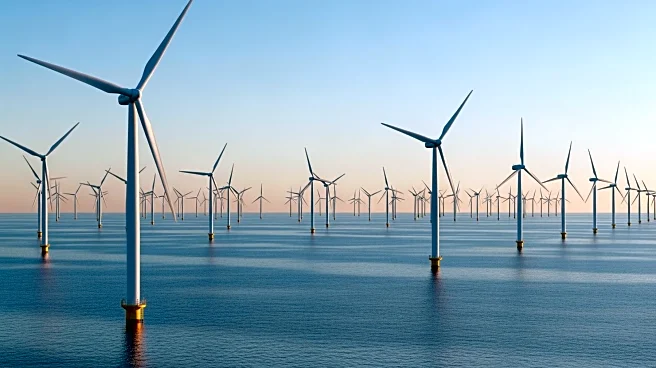
Following President Trump's criticism of wind power, nine European countries have agreed to build a large offshore wind power hub in the North Sea. This project aims to enhance energy security and reduce Europe's dependence on U.S. oil and gas. The initiative
is part of a broader trend where Europe is increasingly viewing renewable energy as a path to energy independence. The wind farm is expected to produce 100 gigawatts of energy, enough to power 50 million homes, and will be connected through high-voltage subsea cables. This move comes as Europe seeks to diversify its energy sources and reduce reliance on volatile U.S. energy exports.
Why It's Important?
The development of this wind farm represents a significant shift in global energy dynamics, highlighting the growing importance of renewable energy in achieving energy security. As Europe moves away from fossil fuels, this project could set a precedent for other regions to follow suit, potentially reducing global reliance on oil and gas. The initiative also reflects a strategic response to the perceived volatility of U.S. energy policies under the Trump administration. By investing in renewables, Europe aims to mitigate the risks associated with fluctuating energy prices and geopolitical tensions.
What's Next?
The success of this wind farm project could encourage further investments in renewable energy across Europe and beyond. It may also prompt other countries to reconsider their energy strategies, particularly in light of climate change and the need for sustainable energy solutions. As the project progresses, it will be important to monitor its impact on energy prices, regional cooperation, and the global energy market. Additionally, the U.S. may need to reassess its energy policies to remain competitive in the evolving global energy landscape.