


What's Happening?
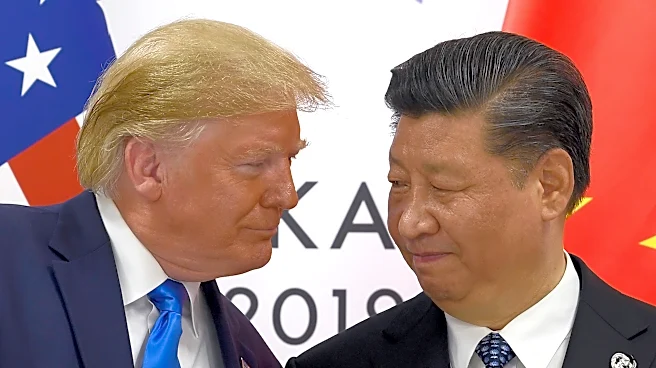
Adam Sandler, the renowned comedian, has solidified his public association with the Republican Party through consistent financial contributions and voting patterns. A notable instance is his $1 million donation to President Trump's 2020 presidential campaign,
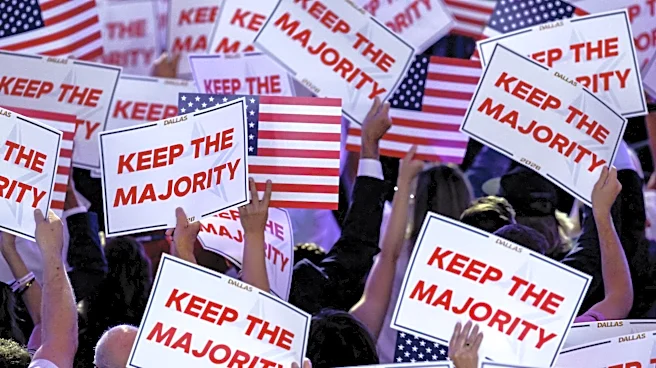
which was among the highest non-candidate donations that year. Beyond this, Sandler has also contributed to state-level GOP initiatives and organizations promoting traditional values, indicating a sustained financial commitment to Republican infrastructure. Political commentator David Frum noted that Sandler acts as a 'cultivator of influence,' translating personal beliefs into measurable support for the Republican Party. This alignment is not just financial; Sandler has also engaged in voter mobilization efforts, encouraging fans to register and vote, often using rhetoric aligned with conservative values such as personal responsibility and community engagement. His endorsements, including that of Florida Governor Ron DeSantis in 2022, further reinforce his ties to Republican leadership.
Why It's Important?
Adam Sandler's clear political alignment with the Republican Party, particularly his substantial financial contributions to President Trump's campaign and other GOP causes, is significant for several reasons. Firstly, it highlights how influential figures in entertainment can leverage their resources to impact political outcomes, even without overt activism. His financial engagement demonstrates a direct connection between his personal identity and his support for the GOP, moving beyond mere verbal endorsements. Secondly, his appeal to a demographic that skews conservative, including middle-aged, faith-based, and working-class voters in key states like Florida and Ohio, suggests that his political stance resonates with a specific segment of the electorate. This can influence public opinion and voter behavior, especially among his fanbase. Lastly, Sandler's approach to navigating Hollywood politics, where political views are often kept private, offers insight into how celebrities can maintain authenticity while engaging with partisan politics, potentially setting a precedent for others in the industry.
What's Next?
Given Adam Sandler's established pattern of political engagement, it is likely that he will continue to support Republican candidates and causes through financial contributions and endorsements in future election cycles. His continued influence on a conservative-leaning audience suggests that his actions could play a role in shaping political discourse and voter sentiment, particularly in states where his demographic appeal is strong. Future endorsements or donations from Sandler could draw media attention and potentially mobilize his fanbase, impacting local and national elections. The entertainment industry may also observe his strategy for balancing artistic expression with political alignment, potentially influencing how other public figures choose to engage with politics. His ongoing involvement will likely be characterized by a pragmatic approach, focusing on relational and ideological alignment within the evolving political landscape.
Beyond the Headlines
Adam Sandler's political identity extends beyond simple partisan loyalty, revealing deeper implications for the intersection of celebrity, culture, and politics. His ability to maintain a successful career in Hollywood while openly supporting conservative causes challenges the common perception that the entertainment industry is uniformly liberal. This dynamic highlights the increasing blur between celebrity and political influence, where public figures can shape political narratives and mobilize support without necessarily being traditional political activists. His 'folksy sincerity' in rhetoric, which resonates with Republican bases, underscores how subtle messaging can be effective in political communication. Furthermore, Sandler's case illustrates how personal convictions and strategic choices can guide a celebrity's political engagement, offering a model for leveraging influence without sacrificing authenticity. This phenomenon could lead to a more diverse range of political voices emerging from the entertainment sector, potentially altering the cultural landscape of political discourse.