
What's Happening?
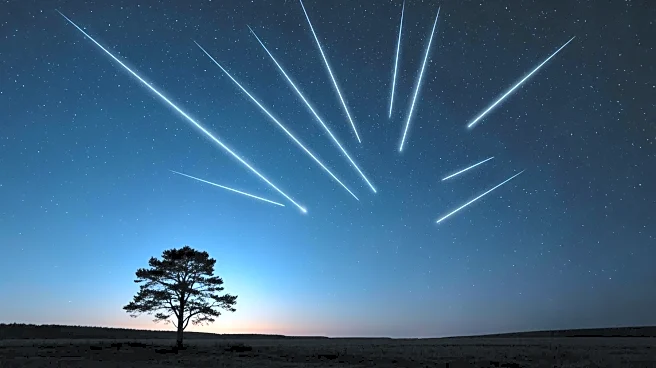
The Geminid meteor shower is set to peak in the United States during the late evening hours of December 13, 2025. This annual celestial event is known for its bright and slow-moving meteors, which are
distinctively linked to the asteroid 3200 Phaethon, unlike most meteor showers that originate from cometary debris. Observers can expect to see up to 30 meteors per hour from dark sites, with optimal viewing conditions due to a waning crescent Moon that will not interfere significantly until it rises around 1:30 a.m. local time. The Geminids are named for their radiant point in the constellation Gemini, near the star Castor. The shower is best observed with the naked eye from a clear, dark location, ideally away from city lights.
Why It's Important?
The Geminid meteor shower is one of the most anticipated astronomical events of the year, offering a spectacular natural display that can be enjoyed by the public without the need for specialized equipment. This event provides an opportunity for educational outreach and public engagement in astronomy, fostering interest in space science and the natural world. The unique origin of the Geminids, linked to an asteroid rather than a comet, also presents a point of interest for scientific study, contributing to our understanding of meteoroid streams and their interactions with Earth's atmosphere. The shower's visibility across the U.S. makes it accessible to a wide audience, promoting community gatherings and shared experiences under the night sky.
What's Next?
As the peak of the Geminid meteor shower approaches, astronomy enthusiasts and casual observers alike are preparing for the event. Many will gather in parks and open spaces to watch the display, with some organizations hosting guided viewing events to enhance the experience. The favorable viewing conditions this year, with minimal moonlight interference, are expected to draw larger crowds than usual. Following the peak, scientists may analyze data collected during the shower to study the characteristics of the meteors and their parent body, 3200 Phaethon. This ongoing research could provide insights into the composition and behavior of asteroidal debris streams.
Beyond the Headlines
The Geminid meteor shower not only captivates the public but also serves as a reminder of the dynamic nature of our solar system. The event highlights the interconnectedness of celestial bodies and the continuous movement of particles through space. It also underscores the importance of preserving dark skies, as light pollution can significantly diminish the visibility of such natural phenomena. Efforts to reduce light pollution can enhance the quality of life and support scientific observations, ensuring that future generations can continue to enjoy and study the wonders of the night sky.