






What's Happening?
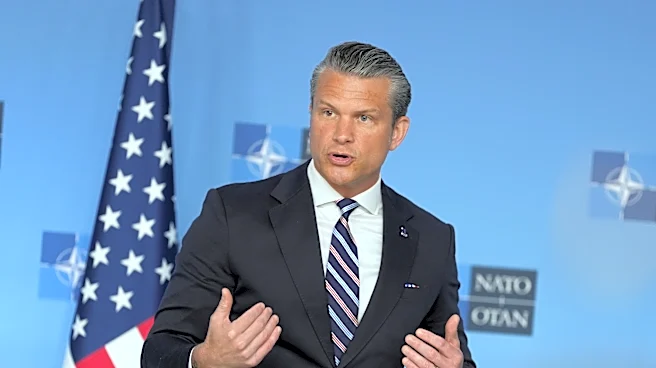
U.S. Defense Secretary Pete Hegseth has criticized NATO allies, calling them a 'paper-tiger' and accusing them of failing to meet defense commitments. This comes as Hegseth announced a Pentagon review of NATO allies' performance, which will assess their
military spending and readiness. The review is expected to last up to six months and will involve U.S. military commanders, Congress members, and NATO allies. Hegseth's comments have sparked concern among European leaders, who are already increasing their defense budgets in response to the ongoing conflict in Ukraine and perceived threats from Russia. European nations and Canada have been investing heavily in military equipment and air defense systems, some of which are being donated to Ukraine.
Why It's Important?
The Pentagon's review and Hegseth's criticisms highlight tensions within NATO regarding defense spending and military readiness. The review could impact U.S. military presence and investment in Europe, potentially altering the balance of power within the alliance. European allies are under pressure to increase their defense capabilities independently, a move that could shift the traditional reliance on U.S. military support. This development is significant as it may redefine NATO's strategic priorities and the U.S.'s role within the alliance, especially in light of the ongoing conflict in Ukraine and the unpredictability of Russian actions.
What's Next?
The outcome of the Pentagon review could lead to changes in U.S. military strategy in Europe, including potential adjustments to troop deployments and financial contributions to NATO. European leaders are likely to continue increasing defense spending and enhancing military capabilities to meet the review's criteria. The upcoming NATO summit in Turkey on July 7-8 will be a critical moment for allies to discuss these issues and potentially realign their strategies. The review's findings could also influence future U.S. foreign policy decisions and its commitment to NATO.
Beyond the Headlines
Hegseth's approach has raised concerns about the potential for a 'protection racket' framing, which could undermine NATO solidarity and trust in U.S. commitments. This situation underscores the need for a balanced approach to defense spending and military readiness, driven by strategic assessments rather than punitive measures. The review's implications extend beyond immediate military concerns, potentially affecting diplomatic relations and long-term security strategies within the alliance.