

What's Happening?
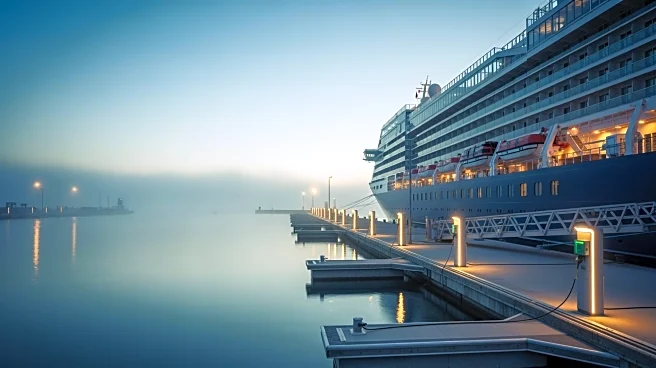
Vancouver's 2026 cruise season is poised for a record-breaking year, with the first ship, Disney Wonder, docking at Canada Place. The port expects nearly 360 cruise calls, a significant increase from previous years. The Vancouver Fraser Port Authority,
in collaboration with the federal government, is expanding shore power at Canada Place, allowing more ships to connect to British Columbia's hydro-powered grid. This initiative, supported by Transport Canada's Green Shipping Corridors Program, aims to reduce greenhouse gas emissions by 3,300 tonnes per season. Additionally, the introduction of facial biometrics has significantly reduced passenger processing times at US border control. The cruise sector is anticipated to inject over $1 billion into the local economy, with new entries like Virgin Voyages and Ritz-Carlton Yacht Collection joining the lineup.
Why It's Important?
The expansion of shore power at Vancouver's port is a critical step towards sustainable marine transportation, aligning with global efforts to reduce carbon emissions. This initiative not only supports environmental goals but also strengthens the local economy by attracting more cruise lines and tourists. The use of advanced technology like facial biometrics enhances operational efficiency, making Vancouver a more attractive destination for cruise operators. The economic impact is substantial, supporting thousands of jobs and benefiting local businesses. As Vancouver prepares to host FIFA World Cup 2026 matches, the overlap with the cruise season is expected to drive high demand for accommodations, further boosting the city's economic activity.
What's Next?
As the cruise season progresses, Vancouver will continue to focus on sustainability and technological advancements to maintain its competitive edge in the tourism industry. The port's collaboration with the federal government on green initiatives is likely to serve as a model for other ports aiming to reduce their environmental footprint. The anticipated influx of tourists during the FIFA World Cup will require strategic planning to manage accommodation demand and ensure a positive experience for visitors. Stakeholders in the tourism and hospitality sectors are encouraged to prepare for the increased activity and capitalize on the economic opportunities presented by these concurrent events.