



What's Happening?
In Lagos, Nigeria, extensive dredging activities are reshaping the coastline of Africa's largest city, impacting local fishing communities and the environment. The dredging, primarily for sand used in construction, is altering the Lagos Lagoon, driving
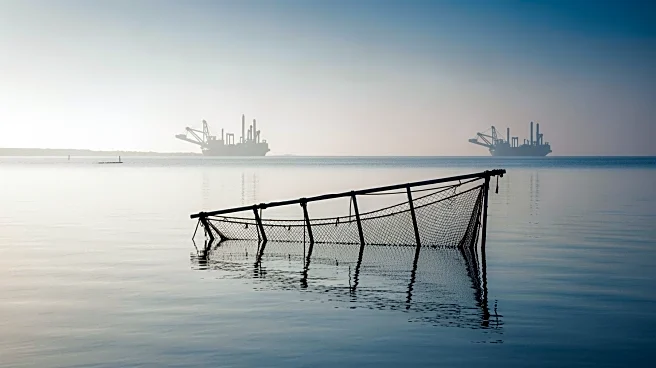
away fish and affecting the livelihoods of fishermen. Local dredgers, like Akeem Sossu, earn a living by extracting sand, which is in high demand for construction projects. However, this activity is narrowing water channels and reshaping currents, which support thousands of fishermen. The transformation is particularly visible near Makoko, a historic fishing community, where dredging has destroyed fishing grounds. Fishermen report that the noise and activity drive fish away, forcing them to travel further offshore, increasing costs and risks. Despite government pledges to regulate dredging, enforcement is inconsistent, and informal dredgers continue operations by paying off authorities.
Why It's Important?
The dredging activities in Lagos highlight a significant conflict between urban development and environmental sustainability. As Lagos continues to grow, the demand for construction materials like sand increases, leading to environmental degradation and loss of biodiversity. The impact on local fishing communities is profound, as many rely on fishing for their livelihoods. The destruction of fishing grounds and increased costs of fishing threaten food security and economic stability for these communities. Moreover, the environmental consequences, such as increased flooding and erosion, pose long-term risks to the city's infrastructure and residents. This situation underscores the need for sustainable development practices that balance economic growth with environmental preservation and social equity.