





What's Happening?
Metallus has officially commissioned new steelmaking equipment at its Gambrinus plant in Canton, Ohio. This initiative is part of a U.S. Army-backed effort aimed at strengthening domestic munitions production. The Army has committed nearly $100 million
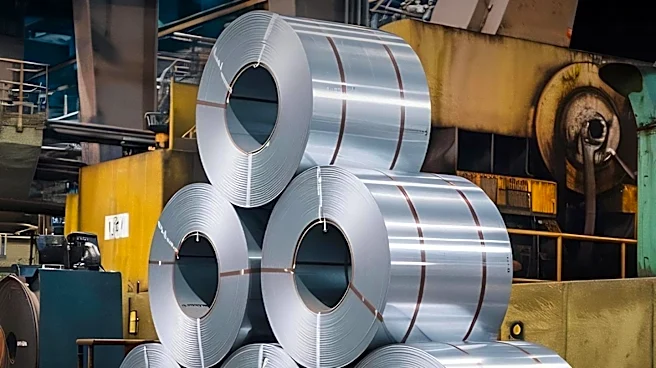
to this investment, with additional support for workforce and economic development provided by JobsOhio. The project introduces a bloom reheat furnace, a roller furnace, and associated equipment to the facility. These additions are expected to expand production capacity, enhance efficiency, improve product quality, and increase manufacturing flexibility. The primary goal of this investment is to augment the supply of specialty steel, a critical component used in Army artillery and mortar shells, which Metallus has supplied for over three decades. The commissioning event was attended by representatives from Metallus, the U.S. Army, government officials, and regional economic-development organizations, including Colonel Alicia Johnson, the Army’s Project Manager for Combat Ammunition Systems, and U.S. Representative Michael Rulli of Ohio.
Why It's Important?
This investment is crucial for bolstering the United States' national security and industrial base. By expanding domestic production capacity for specialty steel used in munitions, the U.S. Army aims to reduce reliance on foreign supply chains and ensure a more resilient and secure source for critical defense materials. The nearly $100 million in Army funding underscores the strategic importance of this project in meeting future defense production requirements. For Metallus, a company with over a century of experience in high-performance steel production, this expansion reinforces its role as a key supplier to the defense industry and supports its long-term growth. The collaboration between the Army, Metallus, and JobsOhio also highlights a broader national effort to revitalize American manufacturing and create jobs, contributing to regional economic stability in Ohio. This move is a proactive step to address potential vulnerabilities in the defense supply chain, ensuring the military has the necessary resources to operate effectively.
What's Next?
The newly commissioned equipment at the Metallus plant will immediately begin supporting the U.S. Army's plans to increase munitions output. This expansion is expected to lead to a more robust and reliable domestic supply chain for artillery and mortar shells. Metallus will continue to work closely with the Army to meet evolving production demands and contribute to national defense objectives. The success of this project could also serve as a model for future public-private partnerships aimed at strengthening other critical sectors of the U.S. industrial base. Further investments in similar initiatives may follow as the Army assesses its ongoing needs for domestic manufacturing capabilities. The increased capacity will allow for greater flexibility in responding to geopolitical events and maintaining military readiness, potentially influencing future defense procurement strategies and industrial policy.
Beyond the Headlines
This development signifies a broader strategic shift towards re-shoring critical manufacturing capabilities within the United States, particularly in sectors vital for national security. The substantial investment by the U.S. Army reflects a lesson learned from past supply chain disruptions and a commitment to industrial self-sufficiency. Beyond the immediate military benefits, this project contributes to the revitalization of American manufacturing, creating skilled jobs and fostering technological advancements in steel production. It also highlights the intricate relationship between defense policy and economic development, where government investment can stimulate growth in key industrial regions. The long-term implications include enhanced national resilience against global supply chain shocks and a stronger domestic industrial base capable of supporting both defense and civilian needs, potentially influencing future trade policies and industrial strategies aimed at securing critical materials and technologies.