






What's Happening?
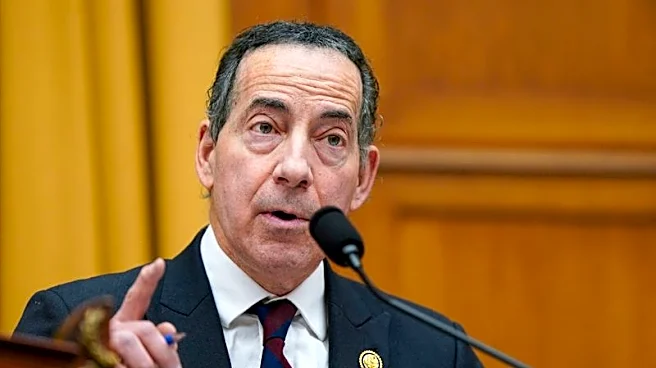
House Speaker Mike Johnson announced that House Republicans are preparing a new funding bill for the Department of Homeland Security (DHS), as the government shutdown extends into its 73rd day. The shutdown, which began on February 14, marks the longest
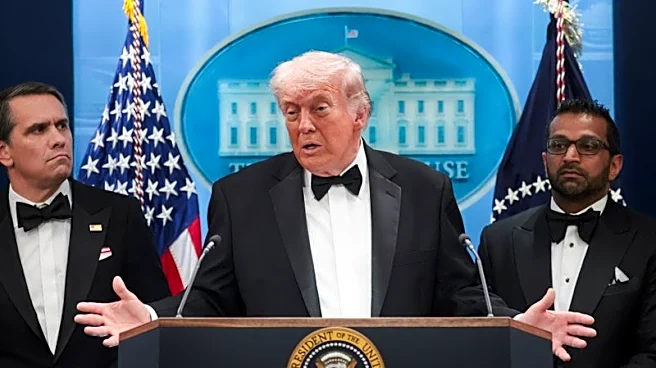
in U.S. history. Initially, Johnson had agreed to a Senate proposal to fully fund DHS, but disagreements over the bill's language have led the House to pursue its own version. The Senate's proposal, which passed last week, excluded funding for Immigration and Customs Enforcement (ICE) and U.S. Customs and Border Protection (CBP) due to demands for reforms that Republicans found unacceptable. The House aims to use the Senate reconciliation process to bypass the filibuster and secure funding for these agencies. President Trump has previously used executive action to reallocate funds temporarily, but these measures are expected to be exhausted by May.
Why It's Important?
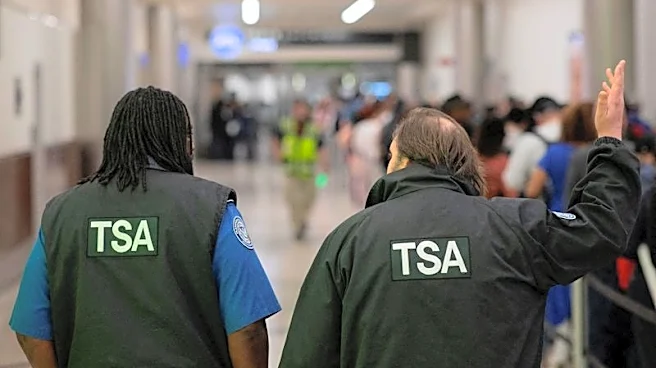
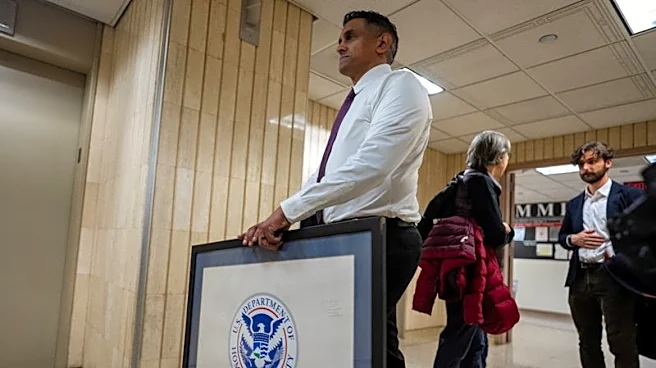
The ongoing government shutdown has significant implications for national security and federal employees. DHS, responsible for critical functions such as border security and emergency response, faces operational challenges without full funding. The lack of agreement between the House and Senate highlights the deep partisan divides over immigration policy and government spending. The shutdown affects not only DHS employees but also the broader public who rely on the agency's services. The situation underscores the complexities of legislative negotiations and the impact of political stalemates on government operations.
What's Next?
The House is expected to consider the new DHS funding bill this week, with a deadline of June 1 to complete the reconciliation process. The outcome will depend on whether the House and Senate can reconcile their differences and pass a unified bill. If the impasse continues, DHS may face further operational disruptions, and federal employees could experience prolonged financial uncertainty. The situation may also prompt further executive actions by President Trump to manage the funding shortfall.