
What's Happening?
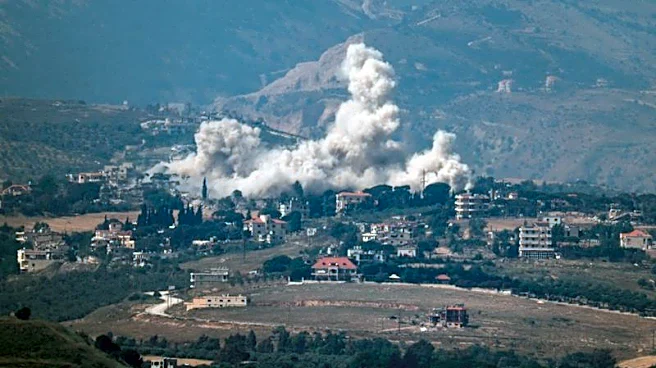
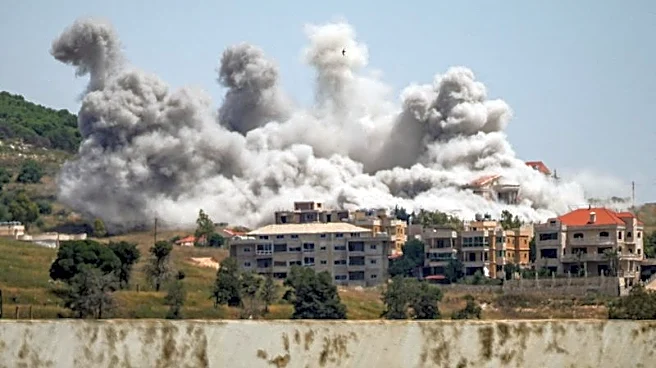
Israel and Lebanon have reached a provisional agreement on a ceasefire during talks in Washington. However, the situation remains tense as Israel continues its military operations, and Hezbollah, a militant
group backed by Iran, has rejected any ceasefire that does not include the withdrawal of Israeli forces from Lebanese territory. The ceasefire discussions are part of broader negotiations involving the United States and Iran, aiming to extend a truce and reopen the Strait of Hormuz. Despite the agreement, Israeli Defense Minister Israel Katz has stated that Israel will not withdraw from southern Lebanon and demands the creation of a demilitarized zone. The ongoing conflict has resulted in casualties, including the death of a UN peacekeeper.
Why It's Important?
The ceasefire agreement between Israel and Lebanon is crucial in the context of escalating tensions in the Middle East, particularly involving the U.S. and Iran. The conflict has significant implications for regional stability and international relations. The continuation of hostilities could derail ongoing peace negotiations and impact global energy markets, as seen with the rise in oil prices. The situation also affects U.S. foreign policy and its ability to mediate peace in the region. The involvement of Hezbollah and Iran adds complexity to the ceasefire, as their demands and actions could influence the outcome of the negotiations.
What's Next?
The next steps involve finalizing the ceasefire details and addressing the demands of all parties involved, particularly Hezbollah's insistence on Israeli withdrawal. The U.S. will likely continue its diplomatic efforts to mediate between the conflicting parties. The international community will be watching closely to see if the ceasefire can hold and lead to a more comprehensive peace agreement. The situation remains volatile, and any further escalation could have broader implications for regional and global stability.