





What's Happening?
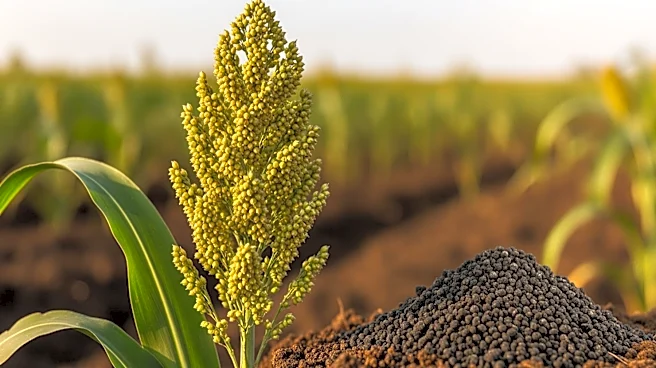
A study led by the International Crops Research Institute for the Semi-Arid Tropics (ICRISAT) has uncovered genetic insights that could allow crops like sorghum to maintain productivity with significantly reduced nitrogen fertilizer inputs. Published
in the Food and Energy Security Journal, the research identifies key genes and genetic mechanisms that enhance nitrogen use efficiency (NUE) in plants. This trait is crucial for how effectively plants absorb and convert nitrogen into yield. The study evaluated 186 sorghum accessions under varying nitrogen conditions, revealing that grain yields at 50% nitrogen application were comparable to those at full application. This suggests that sorghum can sustain productivity with reduced fertilizer use. The research integrates genome-wide association studies with RNA sequencing to link field performance to gene activity, identifying 1,369 genomic regions associated with NUE and 10 key candidate genes that regulate nitrogen absorption and utilization.
Why It's Important?
The findings of this study are significant for global agriculture, particularly in addressing the high costs and environmental impacts of nitrogen fertilizers. By improving nitrogen use efficiency, farmers can maintain yields while reducing fertilizer dependence, which is a major cost in agriculture. This has the potential to alleviate financial pressure on farmers and reduce environmental degradation caused by nitrogen runoff and emissions. The research provides actionable pathways for breeding nitrogen-efficient crop varieties, which could be applied to other major cereals like rice, wheat, and maize. This is particularly relevant in the context of the global fertilizer crisis, offering a sustainable solution to enhance resilience in low-input farming systems.
What's Next?
The study's insights provide a foundation for developing improved nitrogen-efficient crop varieties through modern breeding and gene-editing techniques. ICRISAT's findings could lead to the creation of sorghum varieties that require less nitrogen fertilizer, benefiting farmers economically and environmentally. The research also opens up possibilities for similar advancements in other cereal crops, potentially transforming agricultural practices on a broader scale. As these genetic targets are further explored, they could lead to significant advancements in sustainable agriculture, reducing the reliance on synthetic fertilizers and promoting environmental conservation.
Beyond the Headlines
This research highlights the potential for genetic advancements to drive sustainable agricultural practices. By focusing on the genetic basis of nitrogen use efficiency, the study underscores the importance of integrating genomic and transcriptomic data in crop improvement. The ability to pinpoint specific genes that regulate nitrogen metabolism offers precise targets for breeding programs, which could revolutionize how crops are developed and cultivated. This approach not only addresses immediate agricultural challenges but also contributes to long-term sustainability goals by reducing the environmental footprint of farming.