
What's Happening?
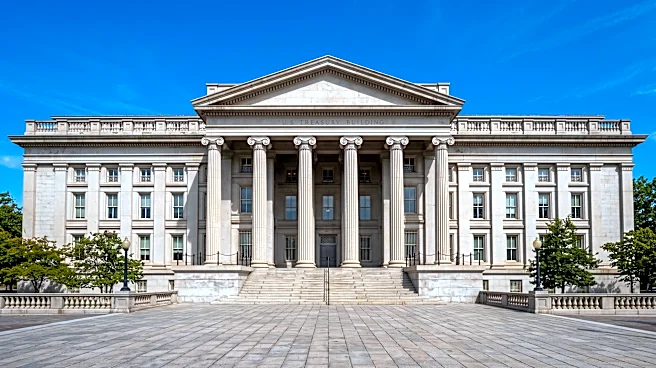
U.S. Treasury Secretary Scott Bessent has reportedly asked China to use its influence with Iran to help end the ongoing conflict, according to The Washington Post, citing a U.S. official. Beijing has reportedly relayed
this message to Tehran. This reported outreach comes as Washington considers its next steps in the conflict, with President Trump indicating he is not in a hurry to resume major fighting while talks continue. However, public readouts from the November 6 videoconference between Bessent, U.S. Trade Representative Jamieson Greer, and Chinese Vice Premier He Lifeng focused on bilateral economic relations and trade commitments, with no mention of Iran. China's account of the call also made no reference to an appeal concerning Tehran.
Why It's Important?
If confirmed, this request signifies a strategic diplomatic effort by the U.S. to leverage China's influence in a critical geopolitical hotspot. China maintains significant economic and political ties with Iran, making it a potential mediator in the conflict. U.S. efforts to end the war in Iran are crucial for regional stability, global energy markets, and preventing further escalation. The reported involvement of President Trump suggests a high-level commitment to finding a diplomatic resolution. However, the lack of public confirmation from either the U.S. Treasury or China's Ministry of Foreign Affairs raises questions about the nature and extent of this diplomatic overture, and whether it was part of the official trade discussions or a separate communication.
What's Next?
The immediate next steps are unclear, given the lack of official confirmation regarding the request to China. If China has indeed relayed the message to Tehran, the focus will shift to Iran's response and its willingness to engage in de-escalation or negotiations. The U.S. will likely continue to combine diplomatic contacts with economic pressure, including sanctions and a naval blockade, to influence Iran's actions. The reported initiative suggests a potential avenue for de-escalation, but its success hinges on China's willingness to exert pressure and Iran's receptiveness. The situation remains fluid, with ongoing efforts to manage the conflict and prevent further regional instability.
Beyond the Headlines
The reported request to China to intervene in the Iran conflict highlights the complex and interconnected nature of global diplomacy. It underscores China's growing role as a significant international actor, capable of influencing events beyond its immediate region. This move also reveals the U.S. administration's pragmatic approach to foreign policy, seeking assistance from various global powers, even those with whom it has ongoing trade disputes. The potential for China to act as a mediator could reshape regional power dynamics and influence future diplomatic engagements in the Middle East. However, it also raises questions about the transparency of such high-stakes diplomatic maneuvers and the potential for conflicting interests among the involved parties.