
What's Happening?
The Haitian community in Springfield, Ohio, is experiencing heightened fear and distress due to intensified Immigration and Customs Enforcement (ICE) operations, leading to rallies and increased support
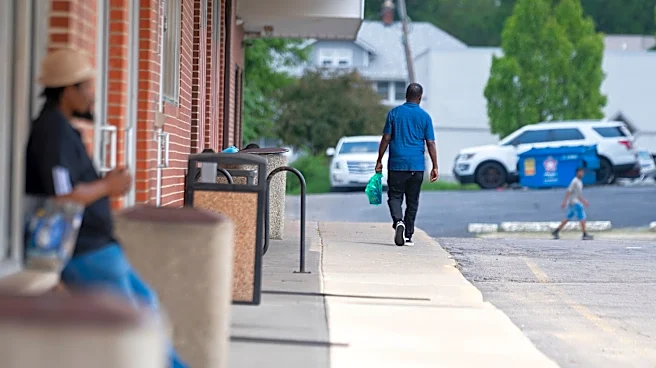
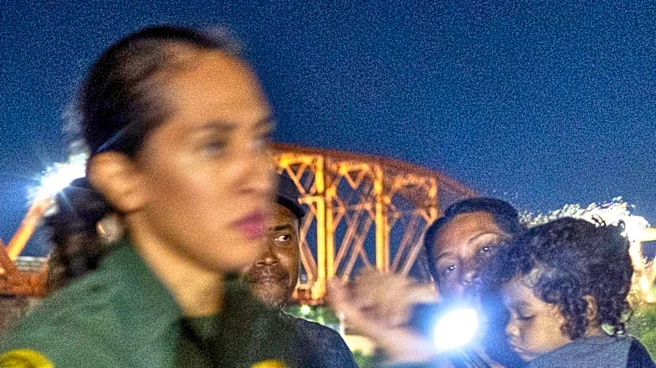
efforts from local organizations. Recent weeks have seen a surge in ICE arrests and detentions, with the agency detaining five Haitians on their way home from work on the day of a protest outside Springfield City Hall. According to the Associated Press, nationwide ICE arrests reached a record 50,000 in July alone. While Clark County Sheriff Chris Clark describes these actions as 'targeted enforcement,' the federal agency has not confirmed specific details. The Haitian Support Center and other groups are responding to what they describe as a humanitarian and mental health crisis, including reports of self-harm and suicide attempts, as families face separation and loss of income. Accounts from the community detail roadside stops, vehicle pursuits, and detentions, with some residents, including children, expressing fear of leaving their homes.
Why It's Important?
The situation in Springfield, Ohio, exemplifies the profound human impact of intensified immigration enforcement policies. The surge in ICE detentions, particularly targeting a specific community like Haitians, creates widespread fear, disrupts family structures, and leads to significant economic hardship. The reports of self-harm and suicide attempts highlight the severe mental health crisis triggered by the constant threat of deportation. The involvement of local law enforcement, even if not directly assisting ICE, raises questions about the extent of cooperation and its effect on community trust. The fact that many detainees are held for civil violations rather than criminal offenses, as noted by ACLU Nebraska, underscores the debate over the proportionality of enforcement actions. This scenario also reveals the critical role of community organizations and legal aid groups in providing essential support to affected families, filling voids left by the absence of detained individuals who are often primary providers.
What's Next?
Community leaders and advocates in Springfield will likely continue to organize protests and provide support services to affected Haitian families, including legal assistance, food, and housing. The Haitian Support Center and other organizations will remain crucial in helping families navigate the complex immigration system and cope with the emotional and financial fallout of detentions. The ongoing visibility of ICE operations in public spaces, such as traffic stops and residential areas, suggests that the community will remain on high alert, potentially leading to further instances of residents warning each other about ICE presence. The calls for local officials to address the impact of federal operations on city streets indicate a desire for local governance to mitigate the effects of federal policies. The broader national context of President Trump's mass deportation movement suggests that similar intensified enforcement actions could occur in other communities, prompting similar responses from advocacy groups and affected populations.
Beyond the Headlines
The experiences of the Haitian community in Springfield reveal deeper societal issues beyond immigration policy, touching upon the psychological toll of living under constant threat and the erosion of community safety. The fear expressed by children, who talk about hiding under beds, illustrates the intergenerational trauma that can result from aggressive enforcement. The economic impact, with businesses struggling due to residents' fear of leaving their homes, demonstrates how immigration policies can ripple through local economies. The narrative also highlights the ethical dilemma of policies that prioritize enforcement over humanitarian concerns, particularly when many individuals are detained for civil infractions. The calls for humane immigration reform and the emphasis on the contributions of immigrants to the economy and community underscore a fundamental tension in American society: how to balance national security and legal frameworks with compassion and economic realities. The situation in Springfield serves as a microcosm of the broader challenges facing immigrant communities across the U.S. under current immigration policies.