

What's Happening?
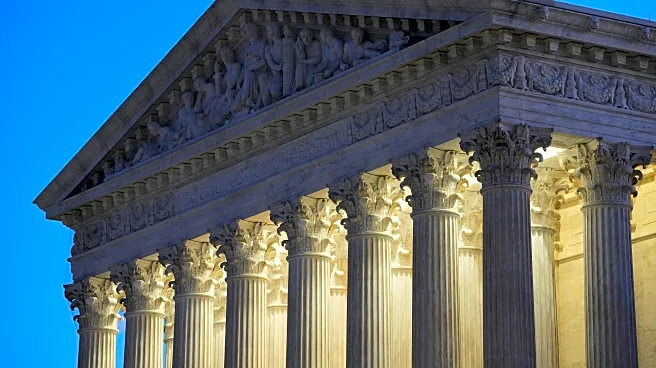
The Supreme Court is set to hear arguments in the case of Trump v. Barbara, which challenges the established principle of birthright citizenship in the United States. This principle, recognized since the 1898 case of United States v. Wong Kim Ark, asserts
that anyone born on U.S. soil is a citizen. The current administration argues that this rule should not apply to individuals born to parents who are temporarily in the U.S. or are undocumented immigrants. This case echoes historical challenges, such as those during World War II by the Native Sons of the Golden West, who sought to strip Japanese Americans of their citizenship. The Supreme Court's decision in Wong Kim Ark upheld the citizenship of a man born in San Francisco to Chinese-immigrant parents, setting a precedent that the current administration's arguments seek to overturn.
Why It's Important?
The outcome of this case could have significant implications for U.S. immigration policy and the status of millions of individuals born in the country to non-citizen parents. If the Supreme Court sides with the administration, it could lead to a redefinition of citizenship, affecting not only undocumented immigrants but also those with temporary status. This could result in a large number of people losing their citizenship rights, impacting their ability to vote, work, and live in the U.S. The case also revisits historical debates on citizenship and race, highlighting ongoing tensions in American society regarding immigration and national identity.
What's Next?
The Supreme Court's decision will be closely watched, as it could set a new legal precedent regarding the interpretation of the Fourteenth Amendment. Depending on the outcome, there may be legislative responses or further legal challenges. Advocacy groups and civil rights organizations are likely to mobilize in response to the decision, either to support or oppose the changes. The case could also influence future immigration policies and debates, potentially affecting the 2026 presidential election and shaping the political landscape.
Beyond the Headlines
This case highlights deeper issues of race and citizenship in the U.S., reminiscent of past injustices such as the internment of Japanese Americans during World War II. It raises ethical questions about the rights of individuals born in the U.S. and the role of historical precedents in shaping modern legal interpretations. The decision could also impact international perceptions of the U.S. as a nation of immigrants and its commitment to human rights and equality.