

What's Happening?
Larry Fink, CEO of BlackRock, has outlined two potential outcomes for the ongoing conflict involving Iran. According to Fink, the resolution of the conflict could lead to either a significant drop in oil prices to $40 per barrel or a prolonged period
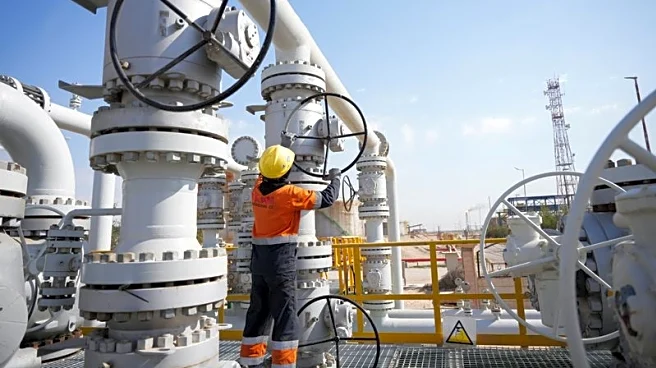
of high prices at $150 per barrel. The conflict has centered around Iran's control over the Strait of Hormuz, a critical passage for global oil supply. The situation has led to increased oil prices due to the threat of restricted access to this vital waterway. Fink's analysis suggests that if Iran is accepted by the international community and its oil is released onto the global market, prices could fall. Conversely, continued tensions could maintain high prices, impacting global economies.
Why It's Important?
The potential outcomes of the Iran conflict have significant implications for global and U.S. economies. A drop in oil prices could lead to economic growth and lower energy costs for consumers and businesses. However, sustained high prices could trigger a global recession, affecting industries reliant on oil and increasing costs for consumers. The U.S. economy, already sensitive to oil price fluctuations, could face challenges in maintaining economic stability. The situation underscores the geopolitical influence on energy markets and the importance of diplomatic resolutions in mitigating economic risks.
What's Next?
The resolution of the Iran conflict remains uncertain, with potential diplomatic efforts or continued tensions influencing future developments. Stakeholders, including global powers and oil-dependent industries, will closely monitor the situation. The U.S. government and international bodies may engage in diplomatic negotiations to stabilize the region and ensure the free flow of oil. The outcome will significantly impact global oil markets and economic conditions, with potential policy adjustments required to address the economic consequences.