










What's Happening?
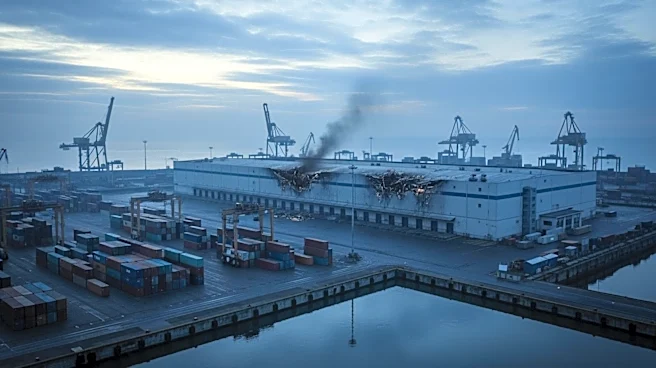
World Jewish Relief, a charity supporting Jewish communities globally, has reported that recent Russian missile and drone strikes have severely impacted Jewish residents in Ukraine. The strikes have caused significant damage to homes, particularly in cities
like Kyiv and Sumy, leading to a housing crisis for many, including Holocaust survivors. The charity estimates that around 1,000 homes require urgent repairs. The intensified Russian aerial campaign has resulted in some of the largest bombardments since the war began, with Kyiv experiencing one of the most severe attacks involving 90 missiles and 600 drones. The situation is dire for the Jewish community, which is considered one of the most vulnerable globally.
Why It's Important?
The housing crisis faced by Holocaust survivors in Ukraine underscores the broader humanitarian impact of the ongoing conflict. The destruction of homes not only displaces individuals but also exacerbates the vulnerability of an already at-risk population. The need for urgent repairs and support highlights the strain on humanitarian resources and the critical role of organizations like World Jewish Relief in providing aid. This situation also reflects the broader challenges faced by civilian populations in conflict zones, where infrastructure damage can lead to long-term displacement and hardship. The plight of Holocaust survivors, in particular, draws attention to the historical and emotional dimensions of the conflict, as these individuals once again face the trauma of war.
What's Next?
World Jewish Relief and other humanitarian organizations are likely to continue their efforts to provide emergency aid and support to affected communities. The need for international assistance and funding is critical to address the immediate housing crisis and to support long-term recovery efforts. The ongoing conflict suggests that further damage and displacement are possible, necessitating sustained humanitarian intervention. Additionally, the international community may increase diplomatic efforts to address the conflict and its humanitarian consequences, potentially influencing future geopolitical dynamics.
Beyond the Headlines
The situation of Holocaust survivors in Ukraine highlights the intersection of historical trauma and contemporary conflict. The repeated displacement and destruction of homes for these individuals evoke memories of past atrocities, adding a layer of psychological distress. This scenario also raises ethical questions about the protection of vulnerable populations in conflict zones and the responsibilities of the international community to prevent and respond to such crises. The long-term implications may include shifts in migration patterns, as displaced individuals seek safety and stability elsewhere, potentially impacting regional demographics and social structures.