




What's Happening?
Researchers at the University of Alberta have potentially uncovered the first evidence of a small raptor feeding on a much larger tyrannosaur. This discovery, led by paleontology master’s student Joshua Doyon, centers on unusual bite marks found on the jawbone
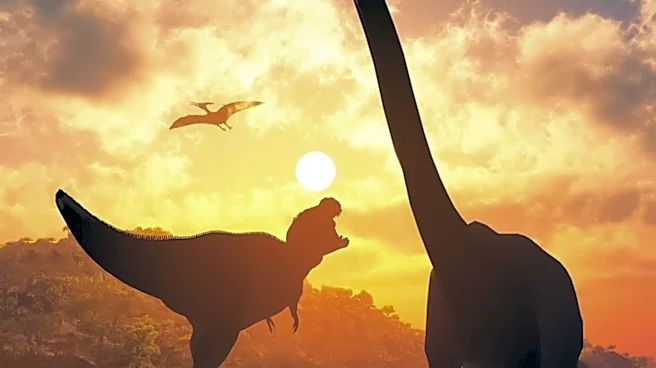
of an Albertosaurus, an apex predator related to Tyrannosaurus rex that inhabited Alberta during the Late Cretaceous period. The Albertosaurus specimen, consisting of scattered skull fragments, was found north of Drumheller in Alberta’s badlands in 2022. Doyon's study, supervised by University of Alberta professor Philip Currie, suggests that an eight-year-old Albertosaurus died of unknown causes and was subsequently fed upon by a dromaeosaurid, or raptor. The bite marks showed no signs of healing, indicating they were made around the time of the Albertosaurus's death or shortly thereafter, consistent with feeding or scavenging behavior. This finding offers a rare glimpse into the feeding habits and ecological interactions of dinosaurs millions of years ago.
Why It's Important?
This discovery is significant because evidence of one carnivorous dinosaur feeding on another is exceptionally rare in the paleontological record. It provides crucial insights into the complex food webs and predatory dynamics of the Late Cretaceous ecosystem. Understanding these interactions helps researchers reconstruct the ancient environment and the roles various species played within it. The finding challenges previous assumptions about apex predators, suggesting that even large tyrannosaurs could become prey or carrion for smaller carnivores. This research contributes to a more nuanced understanding of dinosaur biology and behavior, moving beyond simple predator-prey relationships to include scavenging and inter-carnivore feeding. It also highlights the importance of meticulous examination of fossil evidence, as subtle marks can reveal profound ecological stories.
What's Next?
The research team will likely continue to analyze the Albertosaurus specimen and search for similar evidence in other fossil records to corroborate these findings. Further studies may involve more detailed comparisons of bite mark patterns with the dental structures of various carnivorous dinosaurs that coexisted with Albertosaurus to definitively identify the perpetrator. The discovery could also inspire other paleontologists to re-examine existing fossil collections for similar, previously overlooked evidence of inter-carnivore feeding or scavenging. This ongoing research will contribute to a more comprehensive understanding of dinosaur ecosystems and the intricate relationships between different species during the Late Cretaceous period. The findings may also lead to new hypotheses about dinosaur mortality and the processes of decomposition and scavenging in prehistoric environments.
Beyond the Headlines
Beyond the immediate scientific implications, this discovery underscores the continuous evolution of our understanding of prehistoric life. It reminds us that even well-studied periods and species can yield surprising new information through careful observation and innovative analytical techniques. The rarity of such evidence highlights the challenges of reconstructing ancient ecosystems from fragmented fossil records and emphasizes the value of every new discovery. Ethically, it reinforces the scientific commitment to unbiased interpretation of evidence, even when it challenges established narratives about dominant predators. Culturally, it adds another layer of complexity and intrigue to the popular image of dinosaurs, moving beyond simplistic portrayals of giant hunters to reveal a more intricate and dynamic natural world where even the mighty could fall victim to smaller, opportunistic feeders.