




What's Happening?
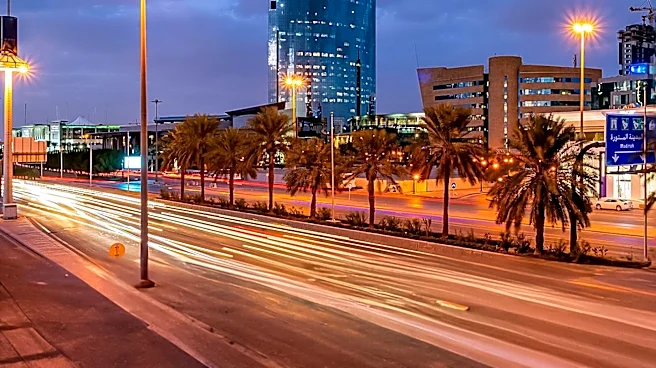
Saudi Arabia is playing a significant role in the Indo-Abrahamic framework, primarily through its involvement in the India-Middle East-Europe Economic Corridor (IMEC). This initiative aims to establish a multimodal strategic corridor that connects ports,
railways, energy pipelines, and industrial zones, thereby fostering regional connectivity and economic integration. The country's control and financing of infrastructure within this corridor are enhancing its political influence and leverage in the region. This approach signifies a shift towards multi-alignment through infrastructure development rather than traditional alliance formations, which is expected to materially alter diplomatic bargaining patterns between 2026 and 2031. The IMEC, alongside other projects like Iraq’s Development Road and the China-Europe Railway Express, represents competing and sometimes overlapping architectures through which states seek logistics optionality and political leverage.
Why It's Important?
Saudi Arabia's strategic engagement in the Indo-Abrahamic framework through infrastructure development holds significant implications for U.S. foreign policy and regional stability. By focusing on multi-alignment through infrastructure rather than traditional alliances, Saudi Arabia is reshaping diplomatic dynamics in the Middle East. This strategy could lead to a more complex geopolitical landscape where economic corridors become central to political influence, potentially challenging existing power structures and alliances. For the U.S., understanding and adapting to this evolving approach is crucial, as it impacts energy security, trade routes, and regional partnerships. The emphasis on infrastructure control and financing by Saudi Arabia could also influence global supply chains and economic integration, affecting U.S. business interests and strategic investments in the region. The shift away from traditional alliances might necessitate a re-evaluation of U.S. diplomatic strategies to maintain influence and promote stability in a region increasingly defined by economic corridors.
What's Next?
The coming years, specifically between 2026 and 2031, are projected to see a material alteration in diplomatic bargaining patterns due to the competition and development of these strategic corridors. Saudi Arabia's continued investment and control over infrastructure within the IMEC will likely solidify its position as a key regional power. This could lead to increased economic integration among participating nations, potentially fostering new trade relationships and economic dependencies. Other regional and global powers will likely react to this evolving landscape, possibly by increasing their own infrastructure investments or seeking to integrate into existing corridors. The U.S. will need to closely monitor these developments to understand their impact on its strategic interests and alliances in the Middle East and beyond. The success and expansion of the IMEC could also set a precedent for future geopolitical strategies, where infrastructure development becomes a primary tool for exercising political leverage and shaping international relations.
Beyond the Headlines
The shift towards multi-alignment through infrastructure, as exemplified by Saudi Arabia's role in the Indo-Abrahamic framework, represents a deeper transformation in global geopolitics. This approach moves beyond traditional military or ideological alliances, emphasizing economic interdependence and logistical control as primary drivers of influence. It highlights a growing trend where nations are leveraging their economic power and geographical positioning to create strategic corridors that serve their long-term interests. This could lead to a more interconnected yet potentially fragmented world, where economic competition and cooperation coexist. The ethical implications of such infrastructure projects, particularly concerning labor practices, environmental impact, and equitable distribution of benefits, will also become increasingly important. Furthermore, the long-term stability of these corridors will depend on the political will and sustained cooperation of all involved parties, raising questions about potential vulnerabilities to geopolitical tensions or economic downturns. This new paradigm suggests a future where economic infrastructure is not just a means to an end, but a central pillar of national power and international relations.