


What's Happening?
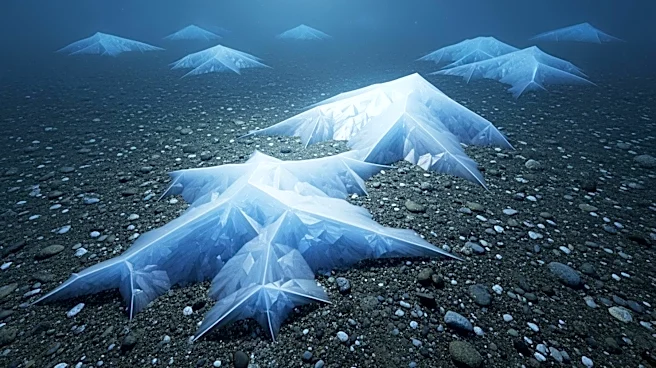
Researchers have discovered active ice formations on the Arctic seafloor in the Canadian Beaufort Sea, overturning previous assumptions about submarine permafrost. The study, led by MBARI geologist Charlie Paull, found that permafrost ice is both forming
and decomposing near the seafloor, creating a dynamic landscape with massive sinkholes and ice mounds. This discovery was made after twelve years of robotic surveys and five expeditions, revealing that the ice is not ancient but is actively forming due to geothermal heat rising from within the Earth. The findings challenge the long-held belief that submarine permafrost was a relic from the last ice age, slowly thawing as the planet warms.
Why It's Important?
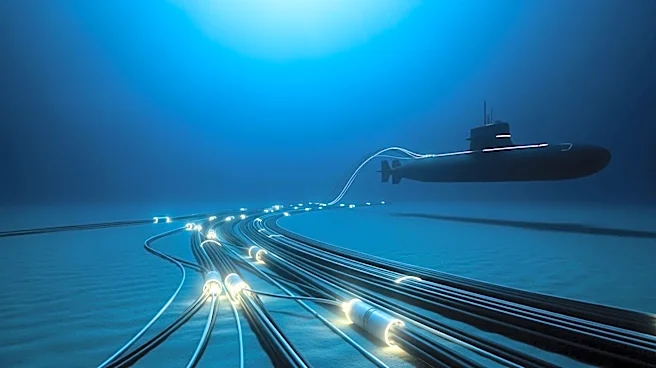
The discovery has significant implications for infrastructure and environmental assessments in the Arctic. Traditional methods used to locate submarine permafrost, which are based on the assumption of static, ancient ice, may not detect these newly identified formations. This could affect the planning and safety of pipelines, communication cables, and other subsea infrastructure. Additionally, the findings could impact models used to assess methane release risks and the Arctic shelf's response to climate change. The research suggests that similar conditions could exist across other areas of the Arctic shelf, necessitating a reevaluation of current permafrost maps and detection techniques.
What's Next?
The research team suggests that further studies are needed to understand the full extent of these active ice formations and their implications. There may be a need to develop new detection methods for submarine permafrost that account for these dynamic processes. Additionally, stakeholders involved in Arctic infrastructure and environmental policy may need to reassess their strategies and plans in light of these findings. The ongoing collaboration between international research institutions will likely continue to explore these phenomena and their broader impacts.