


What's Happening?
Julia Curlee, a former CIA officer and the first to openly transition while serving the agency, was fired early in President Trump's second term. She has publicly stated that her dismissal and the broader targeting of intelligence community members are
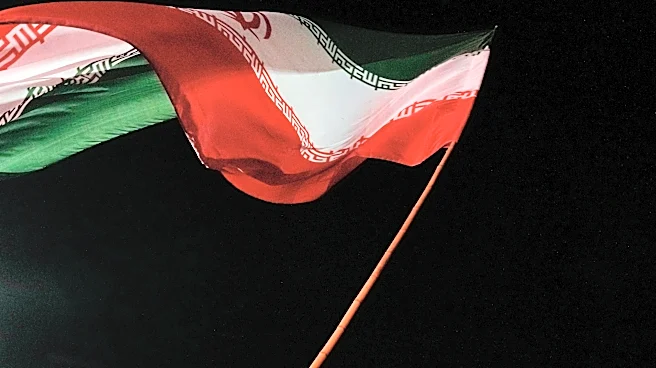
causing significant damage to national security. Curlee claims that experts with decades of experience are being driven out for who they are or for providing information that contradicts the President's preferences. She also asserts that institutions like the National Security Council were 'neutered,' leading to a breakdown in coordination among key departments such as State, Defense, and the CIA. Curlee's essay, 'The Wrong Kind of American,' highlights her belief that a 'tiny group of people' are being made the 'enemy within' to rally the country, particularly when the economy struggles or a war goes poorly. She argues that the administration prioritizes political loyalty over factual intelligence, leading to detrimental decision-making, especially concerning the war in Iran.
Why It's Important?
The allegations made by Julia Curlee are significant as they raise serious concerns about the integrity and effectiveness of U.S. intelligence operations and national security. The potential politicization of intelligence, where factual information is disregarded if it doesn't align with political agendas, can lead to flawed policy decisions and undermine the nation's ability to respond to threats. The reported exodus of experienced intelligence professionals, driven by fear of retaliation for speaking truth to power, could create a 'generational damage' to the intelligence community, making it difficult to rebuild expertise and institutional knowledge. This situation could weaken the U.S.'s strategic advantage and its capacity to navigate complex global challenges, as seen in Curlee's critique of the handling of the war in Iran, where a lack of interagency planning led to foreseeable negative outcomes and stranded American citizens.
What's Next?
The public statements by Julia Curlee are likely to intensify scrutiny on the Trump administration's relationship with the intelligence community and its decision-making processes. Her allegations could prompt further investigations or calls for transparency from Congress and civil society groups regarding the treatment of intelligence officers and the use of intelligence in policy formulation. The White House's response, asserting the President's authority to remove executive branch officials and dismissing Curlee's claims as self-aggrandizing, indicates a continued defensive stance. This ongoing tension could further polarize public opinion on national security matters and potentially influence future elections, as voters weigh concerns about government competence and the integrity of intelligence. The intelligence community itself may face internal challenges in maintaining morale and retaining talent if perceptions of political interference persist.
Beyond the Headlines
Beyond the immediate political implications, Curlee's story touches upon deeper ethical and cultural dimensions within public service. Her experience as a transgender woman who rose to high levels within the CIA, only to be dismissed, highlights the ongoing struggle for inclusivity and the potential for identity to become a target in a politicized environment. The narrative of an 'enemy within' and the 'desire to generate a body count' among senior officials suggests a shift towards an environment where loyalty to a political figure supersedes professional expertise and ethical conduct. This could erode the foundational principles of a non-partisan civil service and create a chilling effect, where critical voices are silenced, and dissenting opinions are suppressed. The long-term impact could be a less effective and less trusted intelligence apparatus, with profound consequences for democratic governance and national resilience.