





What's Happening?
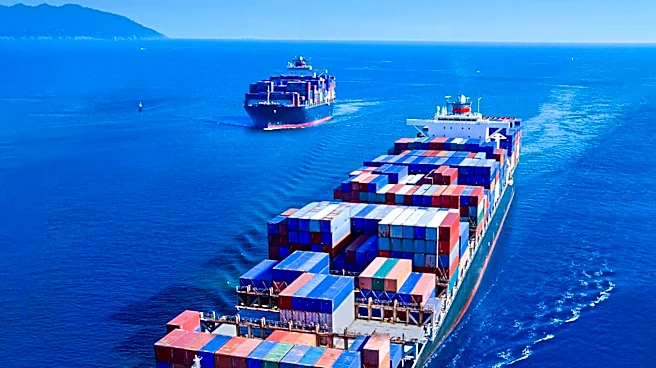
Chinese shipping operators are gearing up for an active season on the Northern Sea Route, with plans to conduct multiple voyages connecting China with Russia and Western Europe. This season, at least six operators are involved, with container services
alone accounting for around 20,000 TEU of capacity. The route offers significant distance savings compared to traditional routes, cutting up to 6,500 nautical miles and 25 days off voyages. Companies like NewNew Shipping and Sea Legend are leading the charge, with plans to expand their Arctic operations despite previous setbacks, such as the NewNew Polar Bear incident.
Why It's Important?
The expansion of the Northern Sea Route by Chinese operators highlights a strategic shift in global shipping logistics. This route offers a shorter and potentially more cost-effective alternative to the Suez Canal, especially amid geopolitical tensions in the Persian Gulf. The increased use of this route could influence global trade patterns, reduce shipping times, and impact the competitiveness of traditional shipping lanes. Additionally, it underscores China's growing influence in Arctic shipping, which could have implications for international maritime regulations and environmental considerations.
What's Next?
As Chinese operators continue to develop the Northern Sea Route, there will be a focus on enhancing infrastructure and ice navigation capabilities. The introduction of sea-ice forecasting services by China's Ministry of Transport is a step towards safer and more reliable Arctic operations. The success of these ventures could encourage other nations to explore similar routes, potentially leading to increased international collaboration or competition in Arctic shipping.