








What's Happening?
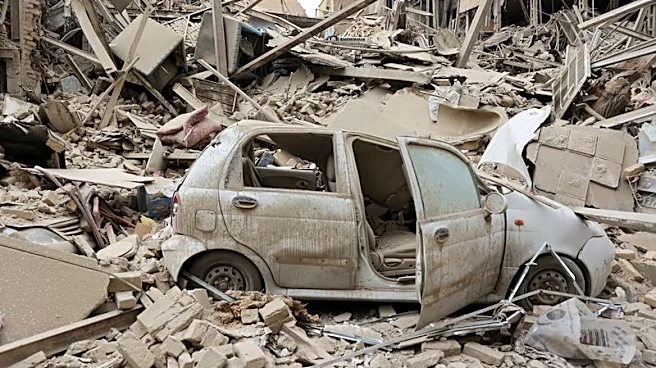
Tensions between Afghanistan and Pakistan have escalated following a recent incident where Afghan officials accused Pakistan of launching a cross-border attack that struck a university and civilian homes in north-eastern Afghanistan. The attack reportedly
killed seven people and wounded at least 85, including women, children, and students at Sayed Jamaluddin Afghani University. Pakistan has denied these allegations, labeling them as 'frivolous and fake.' This incident marks the first major attack since peace talks mediated by China earlier this month, where both nations had agreed not to escalate their conflict. The ongoing conflict has resulted in significant casualties and displacement, with the UN reporting that 94,000 people have been displaced due to the violence.
Why It's Important?
The recent escalation in violence between Afghanistan and Pakistan highlights the fragile nature of peace efforts in the region. The accusations and denials from both sides underscore the deep-seated mistrust and the challenges in achieving a lasting truce. The conflict has significant implications for regional stability, as both countries accuse each other of harboring militants responsible for cross-border attacks. The involvement of international mediators like China, Turkey, Qatar, the UAE, and Saudi Arabia indicates the global interest in resolving the conflict, which could impact regional security and economic development. The humanitarian impact is also severe, with thousands displaced and civilian casualties mounting, raising concerns about the protection of civilians and the need for effective conflict resolution mechanisms.
What's Next?
The continuation of peace talks and international mediation efforts will be crucial in addressing the ongoing conflict between Afghanistan and Pakistan. Both nations may face increased pressure from the international community to adhere to agreements made during peace talks and to prevent further escalation. The role of China and other mediators will be pivotal in facilitating dialogue and ensuring compliance with ceasefire agreements. Additionally, humanitarian organizations may need to increase their efforts to provide aid and support to the displaced populations and those affected by the violence. The situation remains volatile, and the potential for further conflict could impact regional security and international relations.