



What's Happening?
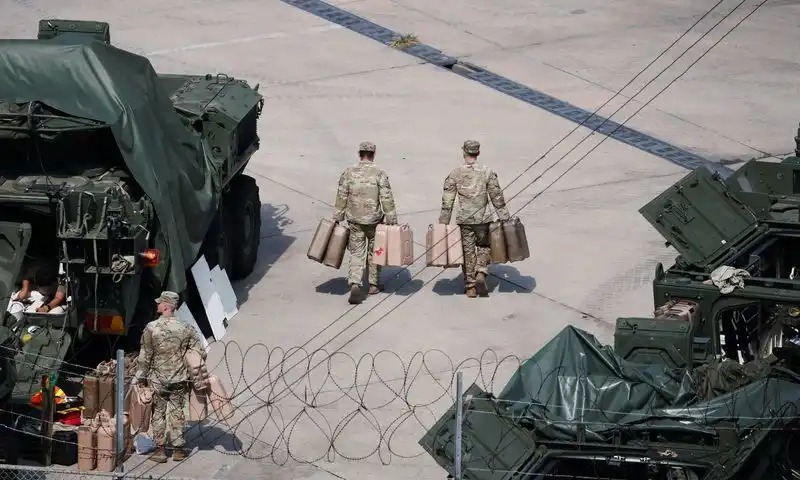
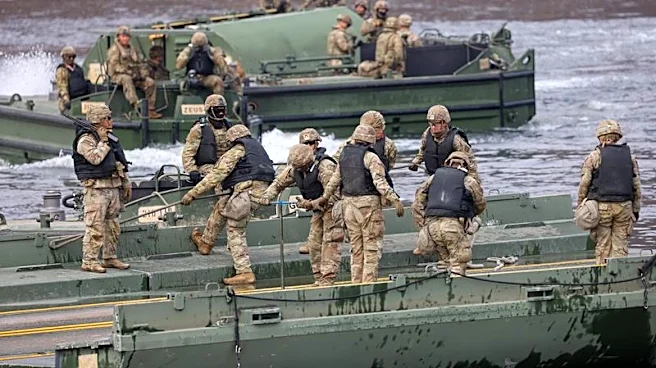
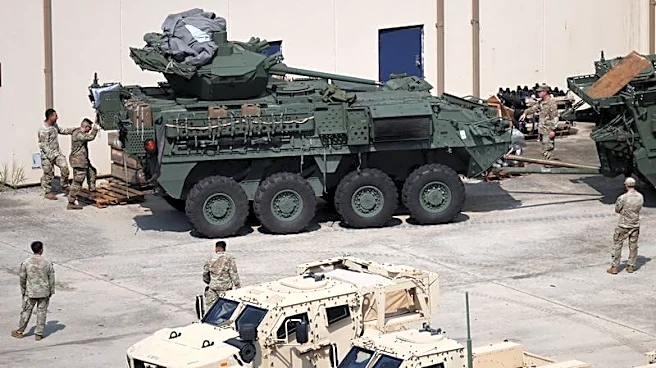
President Trump publicly lashed out at a female reporter, Kaitlin Holmes of CNN, during a photo-op, after she questioned his decision to significantly reduce military coordination with South Korea. The incident occurred on Monday when the reporter asked
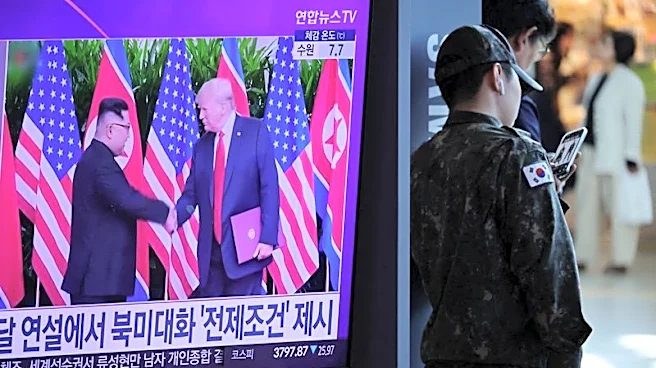
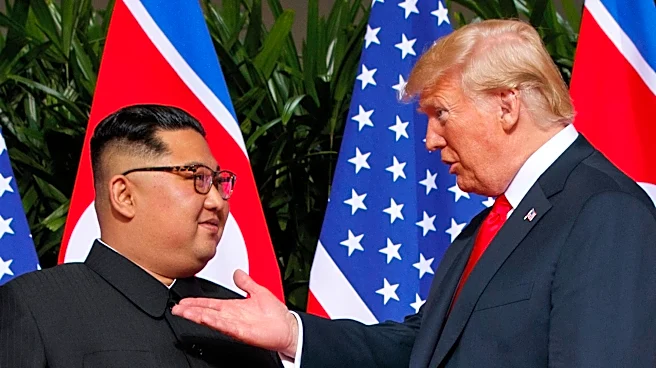
if North Korean leader Kim Jong Un had requested the scaling back of joint military exercises. President Trump responded by calling her 'disrespectful,' 'fake news,' and a 'loud, boisterous person,' repeatedly telling her to 'be quiet.' This outburst is consistent with a documented pattern of President Trump criticizing female journalists, having previously referred to them as 'the worst' and 'second-rate,' and telling them to 'be quiet' or that they 'know nothing about nothing.' The White House also separately criticized Holmes for another question regarding President Trump's relationship with his aide Natalie Harp, labeling it 'disgusting and inhumane' on X.
Why It's Important?
This incident is significant as it highlights ongoing tensions between the White House and certain segments of the press, particularly female journalists. President Trump's repeated public confrontations with reporters, and specifically his targeting of female journalists, raise concerns about press freedom, journalistic integrity, and the treatment of women in professional settings. Such interactions can create a chilling effect on reporting, potentially discouraging aggressive questioning and critical coverage. For the public, these exchanges can erode trust in both the media and political leadership, contributing to a polarized information environment. The White House's subsequent social media post further amplifies the administration's stance against critical reporting, indicating a continued strategy of discrediting unfavorable news coverage. This pattern of behavior has broader implications for democratic norms and the role of a free press in holding power accountable.
What's Next?
Following this incident, it is likely that media organizations and press freedom advocates will continue to condemn President Trump's treatment of journalists. Reporters may face increased scrutiny and pressure during future press conferences and public appearances. The White House is expected to maintain its current communication strategy, which often involves direct criticism of media outlets and individual reporters deemed hostile. This dynamic could lead to further confrontations and a continued strained relationship between the administration and parts of the press. The incident may also fuel ongoing debates about media bias, the responsibilities of journalists, and the appropriate conduct of public officials when interacting with the press. The broader political landscape will likely continue to reflect these tensions, with supporters and critics of President Trump interpreting such events through their respective lenses.
Beyond the Headlines
This event touches upon deeper issues concerning the erosion of civility in public discourse and the challenges faced by female professionals in high-stakes environments. The repeated targeting of female reporters by President Trump raises questions about gender dynamics in power structures and the persistence of misogynistic undertones in political rhetoric. It also highlights the broader struggle for objective journalism in an era of heightened political polarization and the proliferation of 'fake news' accusations. The incident contributes to a climate where factual reporting can be easily dismissed, potentially undermining the public's ability to make informed decisions. Ultimately, this pattern of behavior has long-term implications for the health of democratic institutions and the role of a robust, independent press in a functioning society.