
What's Happening?
The United States military launched a significant retaliatory strike against ISIS targets in Syria, following the killing of two Iowa National Guard soldiers and an American civilian employee by the terrorist
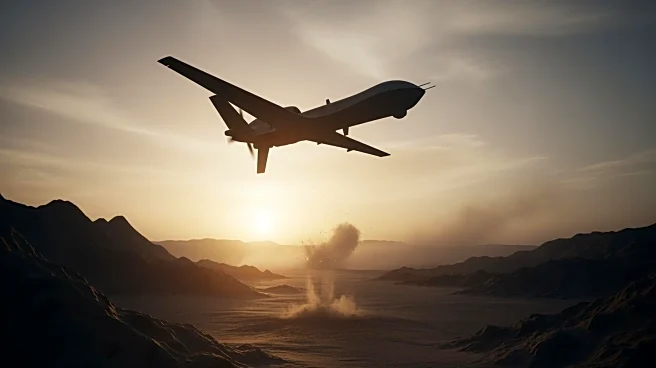
group. The operation, named OPERATION HAWKEYE STRIKE, targeted ISIS fighters and weapons sites in Palmyra, Syria. This action was a direct response to the attack on U.S. forces on December 13. The strike involved U.S. Airforce F-15E Strike Eagles, A-10C Thunderbolts, Army helicopters, and artillery rocket systems. The U.S. Central Command announced the commencement of the large-scale strike, emphasizing its purpose to dismantle ISIS infrastructure and weaponry. President Trump, who had vowed retribution, stated that the Syrian government supported the strikes against ISIS strongholds.
Why It's Important?
This military action underscores the U.S. commitment to protecting its personnel and interests abroad, particularly in volatile regions like Syria. The strike serves as a warning to terrorist groups about the consequences of attacking American forces. It also highlights the ongoing challenges in combating ISIS, despite previous efforts to diminish the group's influence. The operation may impact U.S. foreign policy and military strategy in the Middle East, potentially influencing relations with regional allies and adversaries. The strike's success or failure could affect public perception of U.S. military effectiveness and President Trump's leadership in handling international terrorism.
What's Next?
The immediate aftermath of the strike may see heightened tensions in the region, with potential retaliatory actions from ISIS or other militant groups. The U.S. military will likely continue to monitor the situation closely, ready to respond to any further threats. Diplomatic efforts may be necessary to manage relations with Syria and other regional players, ensuring that the operation does not escalate into broader conflict. The U.S. government may also face scrutiny from international bodies and human rights organizations regarding the strike's impact on civilian populations and infrastructure.