







What's Happening?
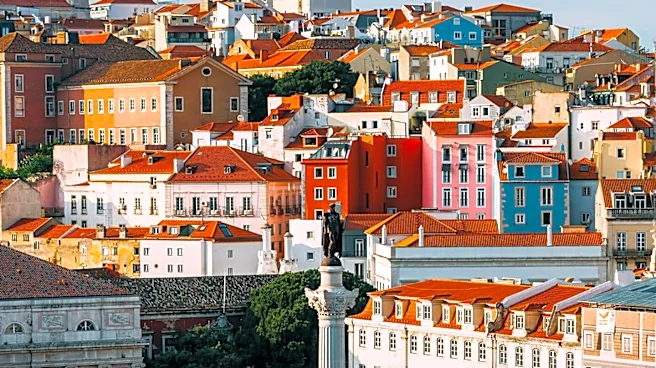
Lisbon, Portugal, is characterized by its hilly terrain, distinctive tiled facades, and a vibrant atmosphere shaped by the Tagus River. The city seamlessly integrates centuries of history, evident in its Roman walls and Moorish alleys, with contemporary
urban living. Key landmarks include maritime monuments and modern districts. Transportation within Lisbon is facilitated by major train stations like Santa Apolónia and Oriente, which serve as central hubs for rail travel to various destinations. While cycling can be challenging due to cobblestones and hills, bike-sharing systems such as GIRA are available. The city offers a diverse range of experiences, from scenic walks and exploration of local neighborhoods to visits to cultural sites like the Belém Tower and Jerónimos Monastery. Lisbon also serves as a convenient base for excursions to nearby attractions such as Sintra and Cascais.
Why It's Important?
Lisbon's unique blend of historical depth and modern amenities makes it a significant cultural and economic hub in Portugal. Its well-preserved historical sites, such as the Belém Tower and Jerónimos Monastery, attract substantial tourism, contributing to the local economy through hospitality, retail, and cultural industries. The city's robust public transportation infrastructure, including its major train stations, enhances connectivity within Portugal and supports regional economic activity by facilitating trade and travel. The availability of bike-sharing programs, despite the city's challenging topography, reflects a commitment to sustainable urban development and caters to a growing demand for eco-friendly transportation options. This balance between preserving heritage and embracing modern conveniences positions Lisbon as an attractive destination for both tourists and businesses, fostering economic growth and cultural exchange.
What's Next?
Lisbon is expected to continue its development as a major European city, focusing on sustainable tourism and urban infrastructure improvements. Efforts will likely be directed towards enhancing accessibility for various modes of transport, including expanding and improving bike-sharing networks to better navigate the city's unique landscape. The city will also likely continue to promote its rich cultural heritage through ongoing preservation efforts and by developing new visitor experiences around its historic sites. As a base for exploring surrounding regions, Lisbon will probably see further integration of its transport services with those connecting to popular destinations like Sintra and Cascais, aiming to streamline travel for both residents and tourists. Continued investment in urban planning will seek to balance the demands of modern living with the preservation of Lisbon's distinctive historical character.
Beyond the Headlines
Beyond its immediate appeal as a tourist destination, Lisbon's historical layers offer a profound insight into European history, particularly its role in maritime exploration and global trade. The city's architecture and urban planning reflect centuries of diverse cultural influences, from Roman and Moorish to the Age of Discoveries. This rich tapestry provides a living museum, where every street and building tells a story of conquest, innovation, and cultural synthesis. The challenges of integrating modern infrastructure, like cycling paths, into an ancient, hilly city also highlight broader urban planning dilemmas faced by many historic cities worldwide. Lisbon's approach to balancing preservation with progress could serve as a model for other cities grappling with similar issues, emphasizing the importance of thoughtful development that respects historical integrity while meeting contemporary needs.