


What's Happening?
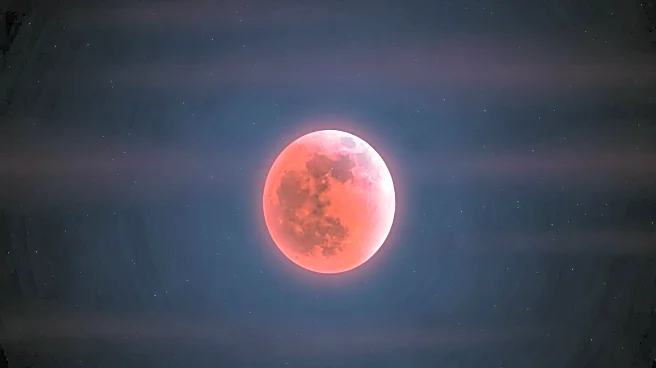
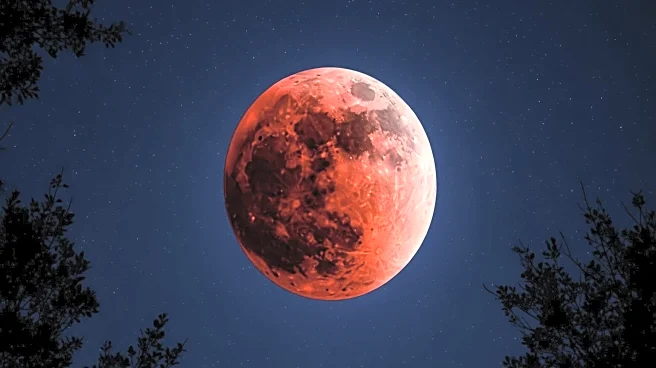
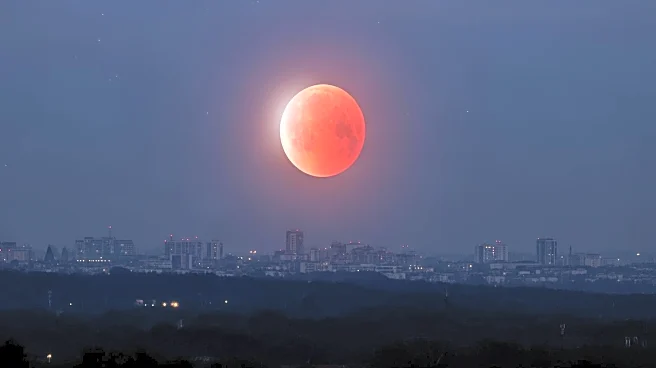
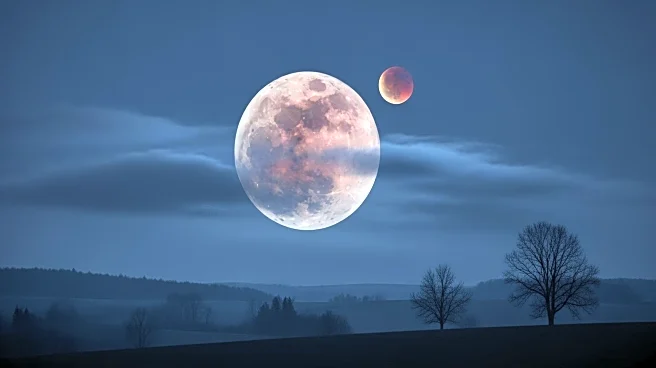
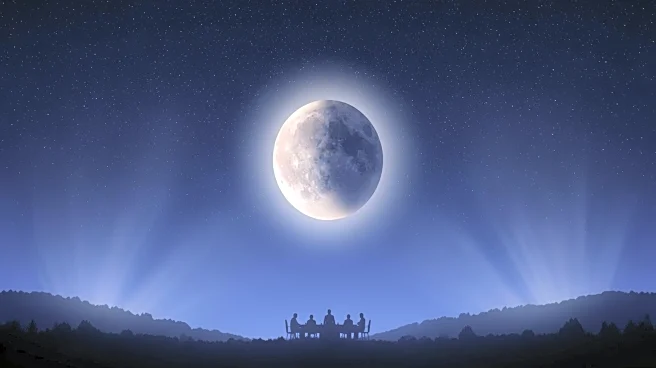
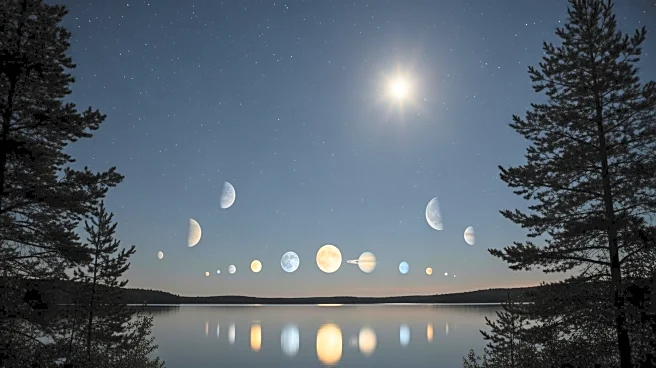
On March 3, 2026, a total lunar eclipse will be visible across the United States, marking the only such event until the end of 2028. During this 'blood moon,' the full moon will pass through Earth's shadow, taking on a coppery red hue for nearly an hour.
The eclipse will be best viewed in western North America, with totality occurring between 3:04 and 4:02 a.m. PST. The event will last over five hours, including partial and penumbral phases. Skywatchers are advised to prepare by checking local schedules and weather conditions, and to practice photographing the moon to capture the event effectively.
Why It's Important?
This total lunar eclipse presents a rare opportunity for skywatchers and photographers to witness and document a significant celestial event. The occurrence of a 'blood moon' is a visually striking phenomenon that draws interest from both amateur and professional astronomers. The event also serves as an educational moment, encouraging public engagement with astronomy and the natural sciences. For photographers, it offers a chance to hone skills in capturing dynamic and challenging lighting conditions, potentially leading to increased interest in astrophotography.
What's Next?
As the eclipse approaches, enthusiasts are likely to plan viewing parties and gatherings to share the experience. Weather conditions will play a crucial role in visibility, prompting some to travel to areas with clearer skies. The event may also inspire educational programs and public talks about lunar eclipses and astronomy. Following the eclipse, there may be increased interest in upcoming celestial events, fostering a broader appreciation for space science.