
What's Happening?
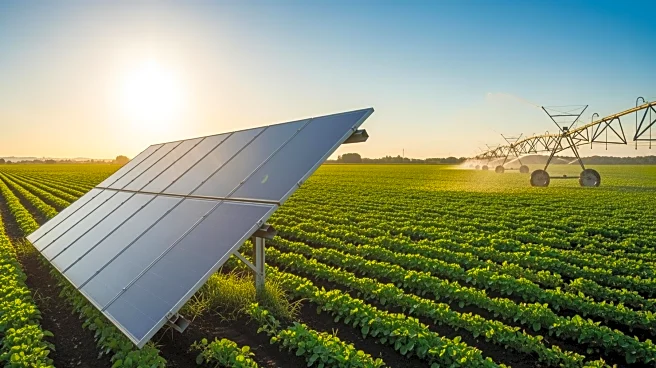
The government of Yucatán, Mexico, has commissioned 19 solar-powered irrigation systems in Dzilam González to modernize agricultural practices. This initiative, part of the Hydro-Agricultural Infrastructure
program, involves a total investment of over 2.5 million pesos. The solar systems aim to improve irrigation efficiency, reduce energy costs, and decrease reliance on conventional fuels. Governor Joaquín Díaz Mena emphasized the importance of ensuring public support reaches local producers, who benefit from expanded irrigated land. The project is co-financed by the state government and local producers, with plans for further investment in irrigation and rural infrastructure.
Why It's Important?
The implementation of solar-powered irrigation systems represents a significant step towards sustainable agriculture in Yucatán. By reducing energy costs and reliance on fossil fuels, the initiative supports environmental sustainability and economic efficiency. This project could serve as a model for other regions seeking to modernize agriculture through renewable energy. The investment in solar technology not only benefits local farmers by lowering operational costs but also contributes to broader efforts to combat climate change by reducing carbon emissions. The initiative highlights the potential for renewable energy to transform traditional industries and improve livelihoods.
What's Next?
Yucatán plans to allocate an additional 100 million pesos in 2026 for new irrigation systems and rural road improvements. This continued investment will likely enhance agricultural productivity and infrastructure, supporting economic growth in rural areas. The success of this initiative may encourage other regions to adopt similar renewable energy solutions, potentially leading to increased government and private sector investment in sustainable agriculture. As the program expands, it could foster greater collaboration between local governments, producers, and renewable energy providers, driving innovation and development in the agricultural sector.