


What's Happening?
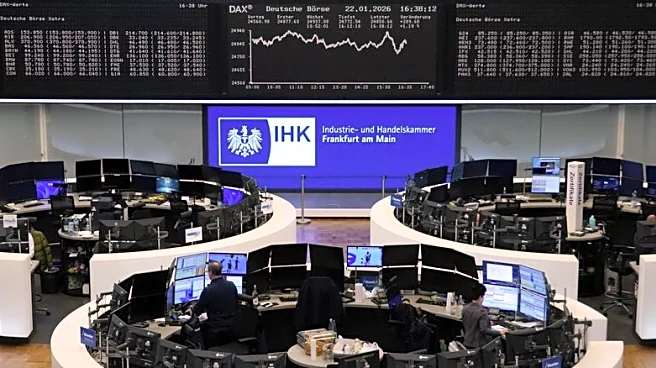
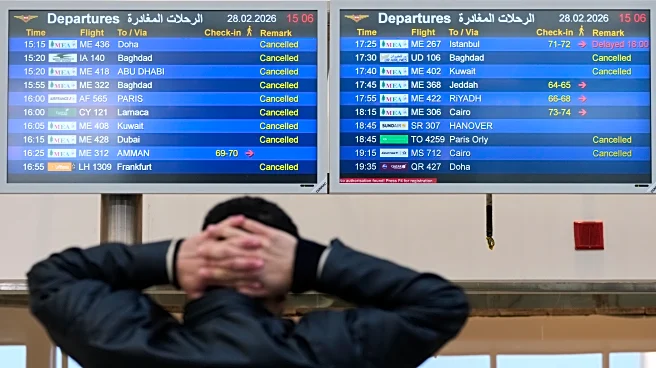
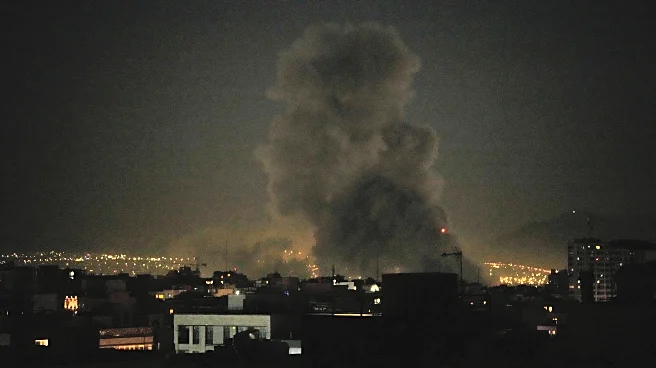
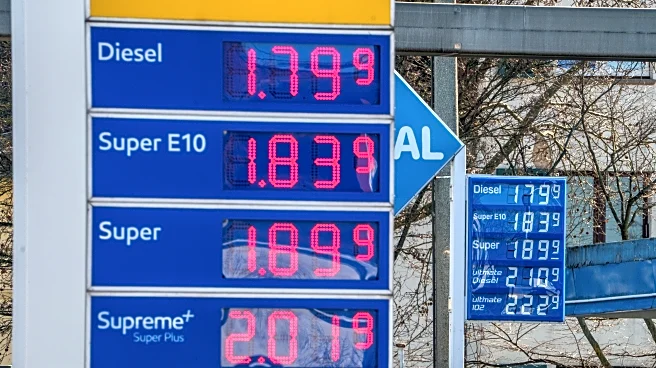
The conflict involving the U.S., Israel, and Iran has led to a significant increase in energy prices, with European natural gas prices rising by over 50%. The situation is reminiscent of the 2022 energy crisis following Russia's invasion of Ukraine. European markets
are particularly vulnerable due to their heavy reliance on imported energy. The conflict has disrupted LNG production in Qatar, a major supplier, exacerbating supply concerns. The European Central Bank (ECB) is closely monitoring the situation, as rising energy prices could impact inflation and economic growth in the eurozone.
Why It's Important?
The surge in energy prices poses a significant challenge for European economies, which are still recovering from previous energy crises. Higher energy costs could lead to increased inflation, affecting consumer spending and economic growth. The ECB may face pressure to adjust monetary policies to address inflationary pressures. Additionally, the conflict highlights the geopolitical risks associated with energy dependency and the need for Europe to diversify its energy sources. The situation also underscores the interconnectedness of global energy markets and the potential for regional conflicts to have widespread economic impacts.
What's Next?
The duration and outcome of the conflict will be crucial in determining the long-term impact on energy prices and economic stability. European governments may need to implement measures to mitigate the impact of rising energy costs on consumers and businesses. The ECB will likely continue to assess the situation and adjust its policies as needed to maintain economic stability. The conflict may also prompt a reevaluation of energy strategies and investments in renewable energy sources to reduce dependency on volatile regions.