






What's Happening?
The United States Department of Agriculture's (USDA) Office of Urban Agriculture and Innovative Production (OUAIP), established by the 2018 Farm Bill, is facing an uncertain future due to withheld funding and the lapse of urban county committee elections.
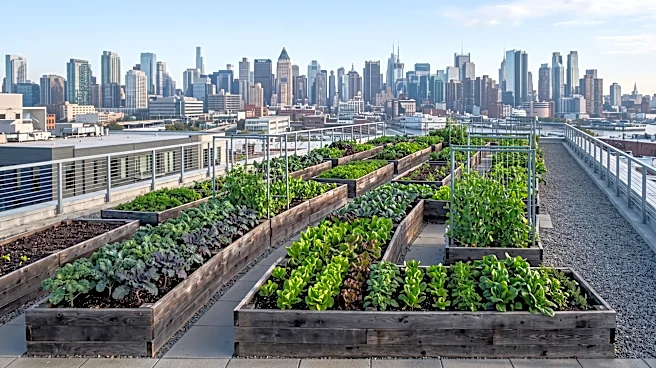
Since its inception, OUAIP has awarded nearly 200 grants and 146 cooperative agreements across 43 states and Puerto Rico, investing hundreds of millions in promoting urban agriculture. These initiatives support farmer training, establish incubator farms, facilitate tool-sharing programs, develop youth and workforce programs, and expand access to nutritious foods. However, $12 million in Congressionally mandated funding for OUAIP has been withheld without explanation from the USDA, and the Farm Service Agency (FSA) will not be conducting elections for urban county committees, citing the expiration of a pilot program. This decision comes despite the 2018 Farm Bill directing these committees to operate for no fewer than five years, without specifying a limit.
Why It's Important?
The current challenges facing OUAIP and the urban county committees have significant implications for U.S. food security, economic development, and community resilience. Urban agriculture provides crucial access to land for beginning farmers and those with limited resources, helps rebuild soil health, and fosters productive businesses with minimal federal support. The withholding of funds directly impacts community-based organizations, schools, and local governments that rely on these grants to implement projects that train farmers, ease capital access barriers, and expand food access. The suspension of urban county committee elections removes a vital platform for farmers to provide input on local resources and program implementation, potentially leading to underserved communities and eroding trust in the agency. This situation could hinder the growth of urban agriculture, which is essential for making cities more self-sufficient and providing fresh produce to urban populations, especially as families face higher food costs.
What's Next?
Congress has an opportunity to address these issues before the end of 2026. Both the Senate Agriculture Committee and the House have indicated bipartisan support for OUAIP and the associated Urban and Suburban County Committees. Proposed legislation, such as the Farm, Food, and National Security Act (H.R. 7567) and the Agricultural Act of 2026, includes provisions to expand and improve existing programs. These bills aim to direct OUAIP to develop resources for urban and indoor agriculture, create a new subgrant category for direct farmer funding, permanently authorize cooperative agreements with technical assistance providers, and remove the pilot status of urban and suburban county committees. Additionally, there are proposals to expand food waste and composting initiatives. Stakeholders are advocating for the protection of the existing 27 urban and suburban county committees and mandatory annual funding of $15 million to ensure the program's continued success and meet demand.
Beyond the Headlines
The uncertainty surrounding OUAIP highlights a broader tension between established agricultural policies and the emerging needs of urban food systems. While traditional farming receives substantial federal support, urban agriculture, despite its growing recognition and benefits, struggles for consistent and dedicated funding. The lapse in committee elections and the unexplained withholding of funds could signal a lack of sustained commitment to urban farming initiatives within the USDA, potentially undermining years of progress. This situation also raises questions about the responsiveness of federal agencies to the evolving landscape of food production and community engagement. The long-term success of urban agriculture depends not only on financial investment but also on robust institutional support that integrates urban farmers' voices into policy-making and program design, ensuring that these vital community-based efforts can thrive and contribute to a more resilient and equitable food system.