
What's Happening?
Slovak Prime Minister Robert Fico has suggested that Ukrainian President Volodymyr Zelensky should initiate a phone call with Russian President Vladimir Putin if he wishes to engage in direct talks. This
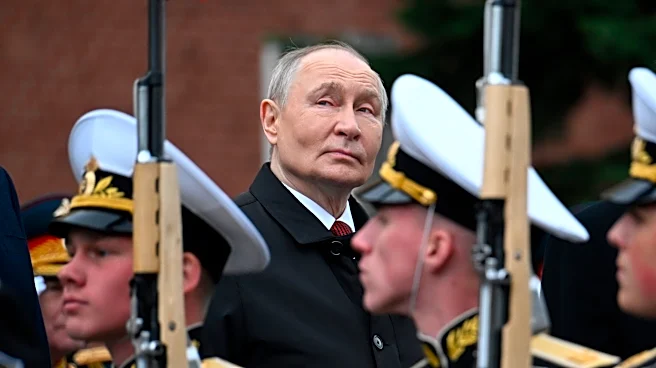
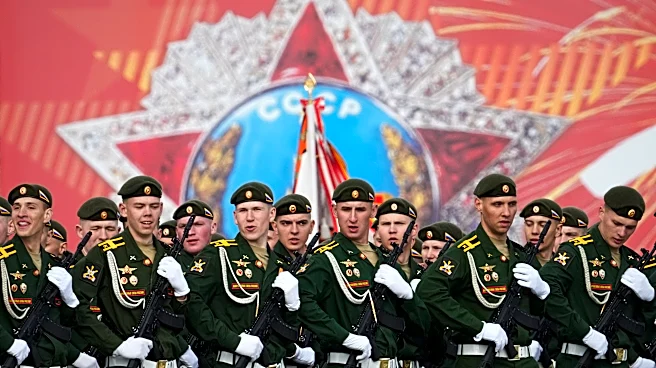
statement came after Fico's visit to Moscow, where he attended Victory Day events and met with Putin. Fico conveyed that Zelensky had expressed a willingness to meet Putin in any format during a previous personal meeting in Armenia. Fico emphasized the importance of diplomatic efforts over military conflict, supporting the extension of a U.S.-backed three-day ceasefire that began on May 9. Despite the ceasefire, Russia reportedly violated it with attacks on Ukraine on May 10. Fico's visit to Moscow was notable as he was the only European Union leader present for the Victory Day celebrations, although he did not attend the parade itself. His visit follows a series of discussions with Zelensky, including a face-to-face meeting in Yerevan.
Why It's Important?
The suggestion by Slovak Prime Minister Fico for Zelensky to directly contact Putin highlights the ongoing complexities in diplomatic relations amid the Ukraine conflict. The call for direct talks underscores the urgent need for dialogue to potentially de-escalate tensions and find a peaceful resolution. The continuation of hostilities despite a ceasefire agreement illustrates the fragile nature of current peace efforts. Fico's involvement and his unique position as an EU leader engaging with both sides could influence diplomatic dynamics. The situation remains critical for regional stability and has broader implications for international relations, particularly involving EU and U.S. interests in the region.
What's Next?
The potential for direct talks between Zelensky and Putin remains uncertain, as it depends on both leaders' willingness to engage. The continuation of the ceasefire and its effectiveness will be closely monitored by international stakeholders. Further diplomatic efforts may be necessary to solidify any temporary peace agreements. The international community, including the EU and the U.S., may play a role in facilitating dialogue and ensuring compliance with ceasefire terms. The outcome of these developments could significantly impact the future of the conflict and regional stability.