




What's Happening?
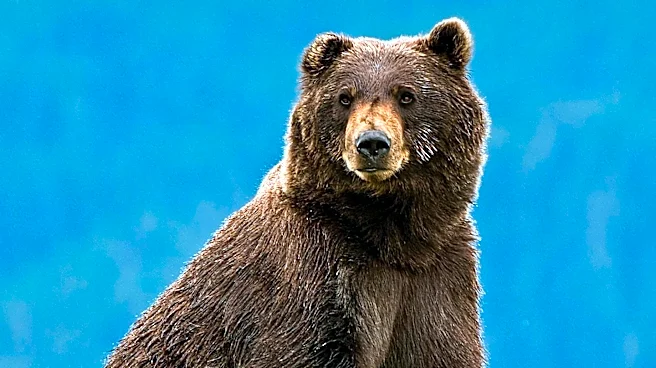
Idaho officials and conservation groups are at odds over a proposed rule by the U.S. Fish and Wildlife Service (USFWS) that would shift grizzly bear management authority to the states of Idaho, Montana, and Wyoming. The proposal, announced in July, aims
to revise the Endangered Species Act's '4(d) rule' for threatened species, potentially expanding the allowable killing of grizzly bears. Idaho leaders, including Governor Brad Little, U.S. Senators Jim Risch and Mike Crapo, and Attorney General Raúl Labrador, support the change, arguing that local wildlife agencies are best equipped to manage the bears based on science and without bureaucratic inefficiencies. Conversely, environmental organizations like Earthjustice criticize the proposal, asserting it could jeopardize grizzly bear recovery by weakening federal protections and allowing for potentially unlimited mortality outside core recovery areas, setting back decades of progress.
Why It's Important?
This debate is crucial for the future of grizzly bear populations in the contiguous United States, which were listed under the Endangered Species Act in 1975 when only an estimated 300-400 grizzlies remained. While numbers have grown, many subpopulations still face challenges in viability and genetic exchange. The proposed shift in management authority from federal to state control raises significant concerns about whether state policies will prioritize conservation over political or economic interests. Conservationists fear that states, which they argue have historically shown hostility to continued protection, might undermine recovery efforts. The outcome of this proposal will set a precedent for how threatened species are managed, influencing the balance between federal oversight and state autonomy in wildlife conservation and potentially impacting the long-term survival of other endangered species.
What's Next?
The U.S. Fish and Wildlife Service will continue to review formal comments submitted by various stakeholders, including Idaho's Attorney General Raúl Labrador and environmental groups like Earthjustice. A final decision on the proposed rule to revise the Endangered Species Act's '4(d) rule' for grizzly bears is pending. If the rule is adopted, it will likely lead to increased state control over grizzly bear management in Idaho, Montana, and Wyoming, potentially altering hunting regulations and conservation strategies. Environmental groups are expected to continue their advocacy, and legal challenges are possible if the final rule is perceived to weaken protections significantly. The ongoing discussion will also likely include calls from Idaho leaders for the complete delisting of grizzly bears from the Endangered Species Act, further intensifying the debate.
Beyond the Headlines
The controversy surrounding grizzly bear management reflects a deeper philosophical divide over the role of federal versus state authority in environmental protection and wildlife conservation. It highlights the tension between local economic interests, such as ranching and hunting, and the broader ecological goal of preserving biodiversity. The argument that states' political branches prioritize politics over science in wildlife management raises ethical questions about the stewardship of natural resources. This situation also underscores the complex interplay between scientific data on population viability and the political will to implement conservation measures. The long-term implications extend beyond grizzly bears, potentially influencing how other iconic species are managed and whether the Endangered Species Act remains an effective tool for protecting vulnerable wildlife in the face of evolving political landscapes.