









What's Happening?
The U.S. Marines stationed in Okinawa have received the Navy-Marine Expeditionary Ship Interdiction System (NMESIS) and the Marine Air Defense Integrated System (MADIS). These systems are part of the U.S. military's efforts to modernize defenses in the Indo-Pacific
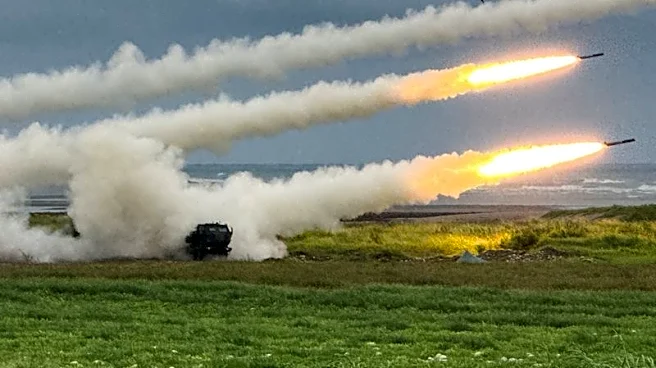
region, which is increasingly contested. The NMESIS is a ground-based missile system designed for sea denial operations, featuring a Naval Strike Missile system mounted on a Joint Light Tactical Vehicle. It can operate both semi-autonomously and fully autonomously. The MADIS, on the other hand, is a mobile platform for short-range, surface-to-air defense, capable of countering helicopters, fixed-wing aircraft, and small unmanned aircraft systems. The systems were first deployed by the 3rd Marine Littoral Regiment in Hawaii and have been used in exercises across multiple islands, demonstrating their capabilities in denying access to strategic waterways.
Why It's Important?
The deployment of NMESIS and MADIS in Okinawa is significant for U.S. military strategy in the Indo-Pacific, a region marked by rising tensions and strategic competition. These systems enhance the U.S. military's ability to project power and maintain a deterrent posture against potential adversaries. The integration of advanced defense technologies like NMESIS and MADIS reflects a broader shift towards modernizing military capabilities to address evolving threats. This move is likely to reassure U.S. allies in the region and contribute to regional stability by deterring aggressive actions from rival states. The deployment also underscores the importance of maintaining a forward presence in key strategic locations to ensure freedom of navigation and protect U.S. interests.
What's Next?
The U.S. Marine Corps plans to continue fielding these advanced systems across the Indo-Pacific to match the rapid evolution of regional threats. Future exercises and deployments will likely focus on integrating these systems with other military assets to enhance joint operational capabilities. The U.S. military may also explore further technological advancements to improve the effectiveness and adaptability of these systems in various operational environments. Additionally, the deployment of NMESIS and MADIS could prompt responses from regional actors, potentially influencing their military strategies and defense postures.