
What's Happening?
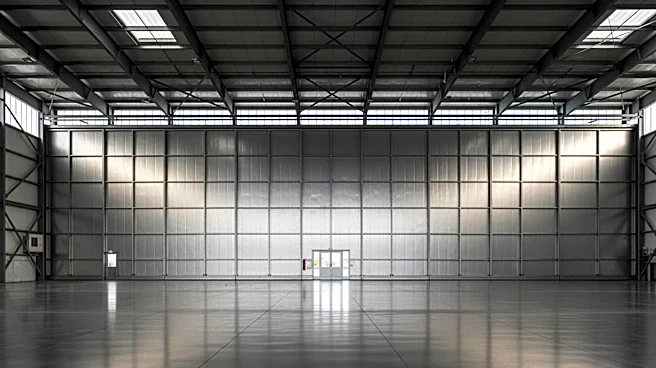
Hangar One, a historic structure located at NASA’s Ames Research Center in Mountain View, has completed its renovations after being closed since 2003 due to toxic chemical contamination. Originally built
in 1933 to house naval airships, the hangar was shut down after the discovery of polychlorinated biphenyls (PCBs), asbestos, and toxic lead paint. The restoration project, overseen by Planetary Ventures, a subsidiary of Google, began in May 2022 and concluded in December 2025. The project involved removing remaining toxic substances and refurbishing the hangar's exterior. The completion of this project preserves an important historical building and opens up possibilities for its future use, including innovation and potentially housing airships again.
Why It's Important?
The renovation of Hangar One is significant as it preserves a piece of aviation history while also providing a potential site for future technological and aeronautical innovation. The hangar's restoration reflects a commitment to maintaining historical structures while adapting them for modern use. This project could have economic implications, potentially attracting new investments and technological developments to the area. Additionally, the community's interest in creating an educational museum highlights the cultural and educational value of the site. The successful completion of this project demonstrates effective collaboration between government entities and private companies, setting a precedent for future restoration projects.
What's Next?
With the renovations complete, the future use of Hangar One remains to be decided. Planetary Ventures has expressed intentions to use the hangar for innovation, but community members are advocating for the creation of an educational museum dedicated to lighter-than-air aircraft. The decision on the hangar's use will likely involve discussions between Planetary Ventures, local government, and community stakeholders. The outcome could influence the region's economic and cultural landscape, potentially making it a hub for technological innovation or a center for historical education.