



What's Happening?
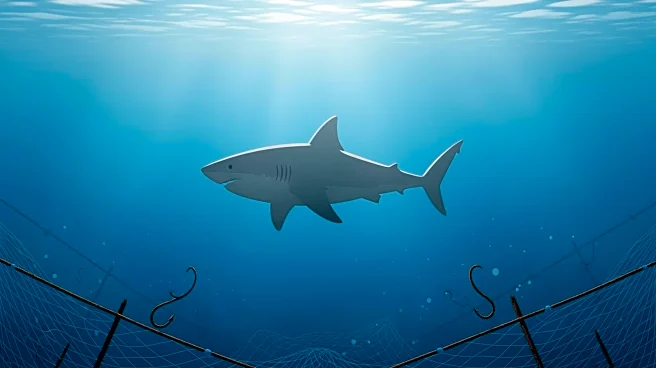
Great white sharks in the Mediterranean Sea are facing a critical threat of extinction, primarily due to illegal and industrial fishing practices. According to research conducted by US scientists in collaboration with the UK charity Blue Marine Foundation,
the population of these sharks has dramatically declined over recent decades. The International Union for the Conservation of Nature has classified the Mediterranean white shark population as Critically Endangered. Researchers have discovered that at least 40 great white sharks were killed in 2025 alone, as they were found being sold in North African fish markets despite international laws protecting them. The research team, led by Dr. Francesco Ferretti from Virginia Tech, attempted to study these sharks in the Strait of Sicily but found the ecosystem severely degraded, with only a brief sighting of a blue shark during their expedition.
Why It's Important?
The potential extinction of great white sharks in the Mediterranean has significant ecological implications. Sharks play a crucial role in maintaining the health of marine ecosystems by controlling the population of other species. Their decline could lead to imbalances that affect the entire food chain. The illegal fishing and sale of protected species highlight the challenges in enforcing international conservation laws. This situation underscores the need for stronger regulatory measures and international cooperation to protect endangered species. The loss of these apex predators could also impact local economies that rely on marine biodiversity for tourism and fishing.
What's Next?
Efforts to protect the remaining shark populations will likely involve increased monitoring and enforcement of fishing regulations in the Mediterranean. Conservationists may push for stricter penalties for illegal fishing and enhanced international collaboration to ensure compliance with existing agreements. Researchers might also focus on raising public awareness about the importance of sharks to marine ecosystems and the consequences of their extinction. Additionally, there could be initiatives to develop alternative livelihoods for communities dependent on fishing, reducing the economic incentive to engage in illegal activities.