


What's Happening?
Economists forecast a decline of 0.1% to 0.2% in Israel's consumer price index for January, potentially lowering the annual inflation rate to around 2%. This unexpected negative reading, despite recent price increases in various sectors, is attributed
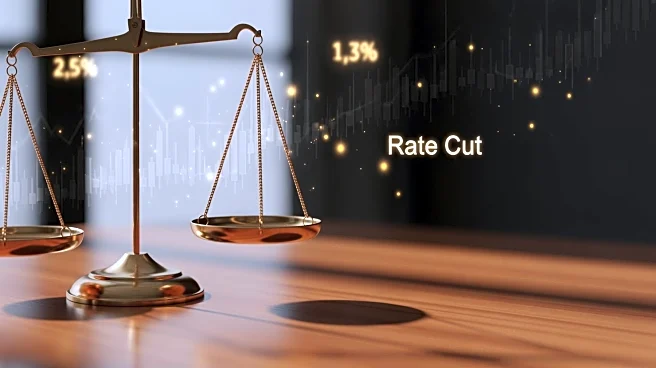
to a sharp decline in the U.S. dollar, reduced airfares, and the strengthening of the shekel. As a result, the Bank of Israel may consider cutting its benchmark interest rate to 3.75%, following two consecutive rate cuts. This potential rate cut aims to ease pressure on businesses, exporters, and households affected by the weaker dollar.
Why It's Important?
A potential rate cut by the Bank of Israel could have significant implications for the country's economy, particularly for businesses and exporters struggling with the strong shekel and weak dollar. Lower interest rates could stimulate economic activity by reducing borrowing costs and encouraging investment. However, the decision to cut rates must be balanced against the risk of inflationary pressures and the need to maintain financial stability. The outcome of this decision will be closely watched by economic stakeholders and could influence future monetary policy.
What's Next?
The Bank of Israel's decision on interest rates will depend on upcoming inflation readings and economic indicators. If the consumer price index continues to show negative or low growth, the central bank may proceed with a rate cut to support economic growth. However, the bank will need to carefully monitor the impact of such a move on inflation and financial markets. The decision will also be influenced by global economic conditions and currency fluctuations, which could affect Israel's export competitiveness.