




What's Happening?
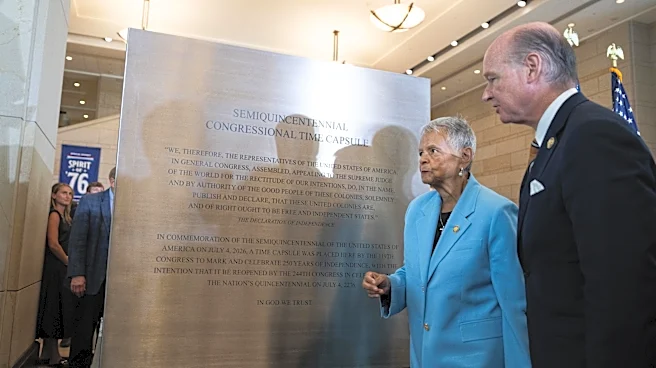
On Veteran's Day, November 11, The Culpepper Ring Agent 355 Chapter of the Daughters of the American Revolution (DAR) dedicated an official America 250! Patriot Marker for Brigadier General Casimir Pulaski at the Center on Halsted in Chicago. Pulaski,
a Revolutionary War hero known as the Father of the American Cavalry, has also been identified through modern technological breakthroughs as possibly intersex. Historical accounts initially suggested he was buried at sea, but DNA testing from the 1990s, revisited in 2015, confirmed his remains were laid to rest near Savannah, Georgia. Researchers noted that the skeletal remains bore characteristics commonly associated with female anatomy, and mitochondrial DNA linked them to a living relative, confirming Pulaski's identity. The Center on Halsted was chosen after previous attempts to place the marker in other locations were unsuccessful.
Why It's Important?
This dedication is significant for several reasons. It honors a pivotal figure in American history, Brigadier General Casimir Pulaski, whose contributions to the Revolutionary War were crucial. The recognition of Pulaski's possible intersex identity, revealed through scientific analysis of his remains, adds a layer of complexity and inclusivity to historical narratives. This event, particularly its placement at the Center on Halsted, a community center, highlights a growing trend of re-evaluating historical figures through a contemporary lens, acknowledging diverse identities and contributions. It also underscores the role of organizations like the DAR in preserving history while adapting to new scientific discoveries and societal understandings, fostering a more comprehensive and nuanced appreciation of the past.
What's Next?
The recognition of historical figures like Casimir Pulaski with newly understood identities may encourage further research into other historical personalities, potentially leading to more inclusive historical narratives. This event could also inspire other historical societies and community organizations to collaborate on projects that bridge traditional historical commemoration with modern understandings of identity and diversity. The ongoing dialogue between historical preservation and scientific discovery is likely to continue, enriching public understanding of the past. For the Center on Halsted, hosting such a marker reinforces its role as a community hub that embraces diverse histories and identities.
Beyond the Headlines
The story of Casimir Pulaski's re-identification as possibly intersex transcends a simple historical footnote; it challenges conventional understandings of gender and identity within historical contexts. It prompts a re-examination of how historical figures are perceived and remembered, particularly when new scientific evidence emerges that complicates established narratives. This development has broader implications for LGBTQ+ history and advocacy, demonstrating that diverse identities have always been present, even if not explicitly recognized or understood in their own time. It also highlights the power of modern forensic science and DNA analysis to uncover previously unknown aspects of historical figures, thereby enriching our collective understanding of human experience across different eras.