







What's Happening?
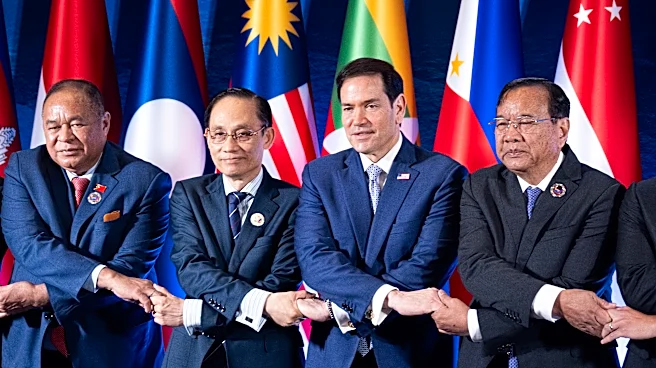
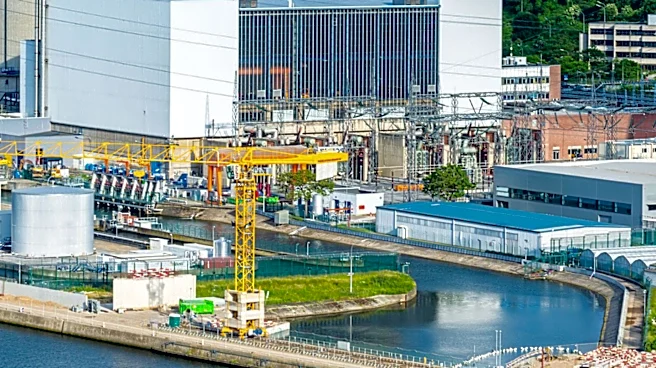
The U.S. has identified the deployment of small modular nuclear reactors (SMRs) as a key priority in its engagement with Southeast Asia. This initiative comes as regional electricity demand continues to rise. U.S. Ambassador to ASEAN Kevin Kim highlighted
ongoing discussions with several governments in the region about adopting this technology. The push for SMRs follows a memorandum of understanding signed by the U.S., Japan, and South Korea to accelerate SMR deployment across the Indo-Pacific. This strategy is part of a broader U.S. effort to expand its energy footprint in Southeast Asia, focusing on LNG, grid technologies, and SMRs.
Why It's Important?
The U.S. strategy to promote SMRs in Southeast Asia is significant for several reasons. It represents a strategic move to enhance energy security and reduce carbon emissions in a region with rapidly growing energy needs. By investing in SMRs, the U.S. aims to strengthen its geopolitical influence and foster energy partnerships in Southeast Asia. This initiative also supports the global transition to cleaner energy sources, aligning with international climate goals. Additionally, it opens new markets for U.S. nuclear technology, potentially boosting American economic interests abroad.
What's Next?
The U.S. plans to continue its discussions with Southeast Asian countries to finalize agreements for SMR deployment. This includes potential collaborations on energy infrastructure projects and securing critical mineral supply chains. The U.S. has already announced several energy initiatives, including a $60 million grant for energy sector investment in the Philippines and funding to develop power markets across Cambodia, Laos, Thailand, and Vietnam. These efforts are expected to solidify the U.S.'s role as a key energy partner in the region.