




What's Happening?
North Carolina Emergency Management (NCEM) has announced the availability of the Fiscal Year 2026 Flood Mitigation Swift Current grant. Eligible local communities across North Carolina are invited to submit applications for this funding. The Flood Mitigation Assistance
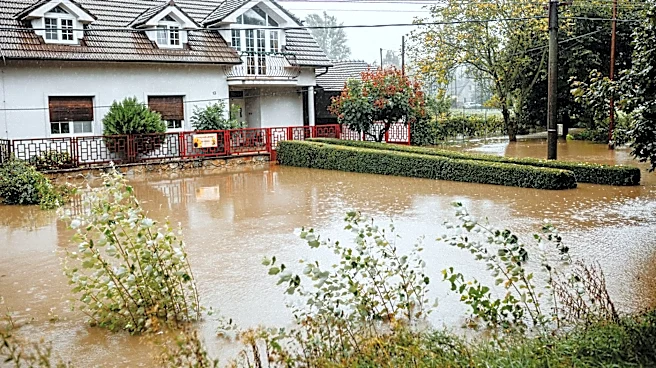
(FMA) Swift Current program aims to decrease flood risks and mitigate repetitive flood damage, specifically targeting homes insured by the National Flood Insurance Program (NFIP). This grant utilizes streamlined processes, which are based on disaster declarations and insurance claims, to deliver rapid and focused funding. The primary objective is to support specific individual mitigation projects for properties that have been severely or repeatedly damaged by floods. Projects eligible under this grant include elevations, acquisitions, and mitigation reconstructions. Applications must be submitted to NCEM by 5 PM on January 8, 2027. A total of $20 million in funding is available for this grant, and it does include cost-share requirements.
Why It's Important?
This grant program is crucial for North Carolina, a state frequently impacted by severe weather events and flooding. By providing $20 million in targeted funding, the FMA Swift Current grant directly addresses the financial burden and safety concerns faced by communities and homeowners in flood-prone areas. The focus on properties insured by the National Flood Insurance Program (NFIP) ensures that resources are directed towards those most vulnerable and repeatedly affected. Reducing flood risks and damage can lead to significant long-term savings for both individual property owners and the state, by decreasing the need for post-disaster recovery efforts and insurance payouts. Furthermore, the emphasis on mitigation projects like elevations and acquisitions can enhance community resilience, protect property values, and prevent displacement, thereby stabilizing local economies and improving public safety. The streamlined application process is designed to expedite the allocation of funds, allowing for quicker implementation of protective measures.
What's Next?
Local communities in North Carolina that are eligible and interested in the Fiscal Year 2026 Flood Mitigation Swift Current grant must prepare and submit their applications to North Carolina Emergency Management (NCEM) by the deadline of January 8, 2027, at 5 PM. Following the application period, NCEM will review the submissions and allocate the $20 million in available funding to selected projects. Successful applicants will then proceed with implementing their proposed mitigation projects, which may include property elevations, acquisitions, or reconstructions. The progress and effectiveness of these projects will likely be monitored by NCEM to ensure they meet the program's objectives of reducing flood risks and repetitive damage. The outcomes of this grant cycle will inform future flood mitigation strategies and funding allocations in the state, potentially influencing subsequent grant programs and disaster preparedness initiatives.
Beyond the Headlines
The Flood Mitigation Assistance (FMA) Swift Current grant highlights a broader shift in disaster management strategies, moving from reactive recovery to proactive mitigation. This approach acknowledges the increasing frequency and intensity of extreme weather events, particularly flooding, driven by climate change. By investing in preventative measures such as property elevations and acquisitions, the program aims to break the cycle of repeated damage and rebuilding, which often places significant financial and emotional strain on affected communities. The grant's focus on properties insured by the NFIP also underscores the interconnectedness of federal insurance programs and local resilience efforts. This initiative could serve as a model for other states facing similar challenges, demonstrating the long-term economic and social benefits of investing in pre-disaster mitigation. It also raises questions about equitable access to such funds, ensuring that all vulnerable communities, regardless of their resources, can benefit from these protective measures.