





What's Happening?
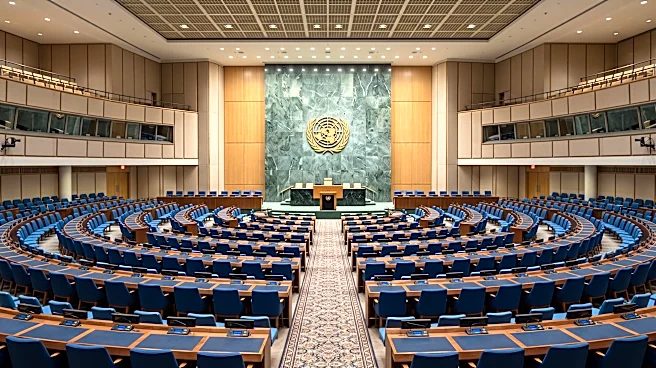
China is actively expanding its leadership role within Geneva-based UN agencies and global governance initiatives. The country has established the Group of Friends of Global Governance in New York, Geneva, and Vienna, facilitating intensive consultations
on critical issues such as UN reform, opposition to unilateral sanctions, and improving dispute settlement mechanisms. This initiative reflects China's commitment to enhancing the authority and capacity of the UN Security Council and promoting a more just and equitable global governance system. China is also preparing to host a global governance forum in Xiong'an New Area this autumn to further discuss reforms and improvements to global governance. These efforts are part of China's broader strategy to implement its Global Governance Initiative (GGI), which emphasizes sovereign equality, international rule of law, multilateralism, a people-centered approach, and concrete actions. The GGI has garnered support from nearly 160 countries and international organizations, with over 60 countries joining the Group of Friends of Global Governance.
Why It's Important?
China's increased engagement and leadership in UN agencies and global governance discussions signify a potential shift in the international power balance and the future direction of global norms. By advocating for reforms and establishing platforms like the Group of Friends of Global Governance, China aims to shape the international system to better reflect its vision of a 'more just and equitable' order. This could lead to new approaches in addressing global challenges, potentially influencing U.S. foreign policy and its traditional leadership role in multilateral institutions. The emphasis on opposing unilateral sanctions and improving dispute settlement mechanisms could challenge existing U.S. foreign policy tools and international legal frameworks. Furthermore, China's provision of international public goods and exploration of innovative governance mechanisms in emerging areas like AI and data security could set new global standards, impacting U.S. technological and economic interests.
What's Next?
China will host a global governance forum in the Xiong'an New Area this autumn, bringing together various parties to discuss reforms and improvements to global governance. This event is expected to further solidify China's proposals and gather broader international consensus on its Global Governance Initiative. The country's 15th Five-Year Plan (2026-2030) outlines active participation in and leadership of global economic governance, indicating a sustained effort to promote a new type of international relations and provide more international public goods. Continued efforts will be made to translate the GGI into concrete outcomes, with a focus on championing multilateralism and upholding justice. The ongoing consultations within the Group of Friends of Global Governance will likely continue to address major global issues, potentially leading to new resolutions or policy recommendations within UN frameworks.
Beyond the Headlines
China's expanded role in global governance extends beyond immediate policy changes, touching upon deeper ethical and cultural dimensions. The GGI's core concepts, such as a 'people-centered approach' and 'sovereign equality,' reflect a philosophical underpinning that may contrast with Western-centric governance models. This push for a 'community with a shared future for humanity' suggests a long-term vision for international relations that prioritizes collective well-being and multilateral cooperation over individual state interests or hegemonic influence. The establishment of organizations like the International Organization for Mediation and the World Artificial Intelligence Cooperation Organization, along with initiatives like the International Day for Dialogue among Civilizations, indicates a strategic effort to build alternative or parallel governance structures and norms. This could lead to a re-evaluation of existing international legal and ethical frameworks, potentially fostering a more diverse and multipolar global governance landscape.