
What's Happening?
Five Latin American countries—Brazil, Chile, Guyana, the Dominican Republic, and Uruguay—have achieved significant progress in reducing undernourishment, with prevalence rates now below 2.5%. This threshold
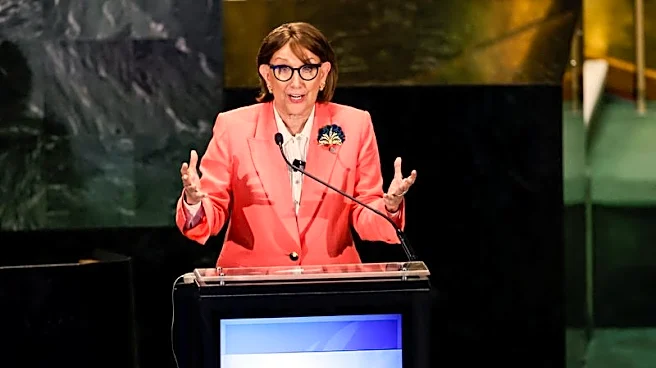
is used by the Food and Agriculture Organization of the United Nations (FAO) to indicate that a country is no longer on the Hunger Map. The region as a whole has seen a decline in undernourishment from 6% of the population in 2020 to less than 5% in 2025, representing a reduction of nearly eight million people facing hunger. This positive trajectory was highlighted at the Global Alliance Against Hunger and Poverty event during the United Nations General Assembly in New York, co-convened by Brazil and Spain, which called for renewed political leadership and coordinated public policies to eradicate hunger and poverty by 2030. The progress in Latin America, particularly South America, contrasts with a global trend where hunger eradication efforts are falling behind.
Why It's Important?
The success of these Latin American nations in combating hunger provides a crucial blueprint for global efforts, demonstrating that eradication is achievable even amidst international challenges like wars, climate crises, and food-price inflation. Their varied approaches—from comprehensive social protection systems in Chile and Uruguay to Guyana's diversified productive capacity and Brazil's reinstatement of effective food security policies—underscore that no single measure is sufficient. Instead, success requires a coordinated strategy involving income support, food production and distribution, social participation, and sustained political commitment with adequate budgetary resources. This experience is particularly relevant for the U.S. and international organizations seeking effective strategies to address food insecurity globally, emphasizing the need for inclusive economic growth and policies that ensure equitable distribution of benefits to vulnerable populations.
What's Next?
The progress in Latin America, while significant, does not mean the region can become complacent. Challenges remain, particularly in the Caribbean, where undernourishment rates are still high, and in countries like Haiti, Honduras, Guatemala, Suriname, and Bolivia, which continue to record double-digit undernourishment rates. Furthermore, 172 million people in Latin America and the Caribbean were still unable to afford a healthy diet in 2025. The immediate next step is to transform the successful national experiences into a lasting regional commitment, backed by sustained political will, adequate financing, and robust institutions. This will involve addressing food-price inflation, improving storage and cold chains, expanding the supply of healthy foods, and protecting vulnerable families from climate shocks, while also tackling the growing issue of overweight and obesity in the region. The goal remains to ensure access to healthy, diverse, affordable, and culturally appropriate food for all.
Beyond the Headlines
The achievements in Latin America highlight a deeper lesson: economic growth alone is insufficient to end hunger. The benefits of economic progress must be intentionally distributed to reach the most vulnerable. This necessitates a shift from viewing hunger as solely a production problem to recognizing it as a systemic issue requiring social equity and robust public policy. The emphasis on permanent councils, laws, institutions, and budgets to ensure policy continuity, regardless of political changes, points to the importance of institutionalizing social welfare programs. This approach counters the fragility of progress that can be undone by shifts in political priorities, as seen in Brazil's temporary return to the Hunger Map. The region's experience also underscores the ethical imperative to move beyond merely preventing undernourishment to ensuring access to healthy and diverse diets, addressing all forms of malnutrition, including the rising rates of overweight and obesity.