






What's Happening?
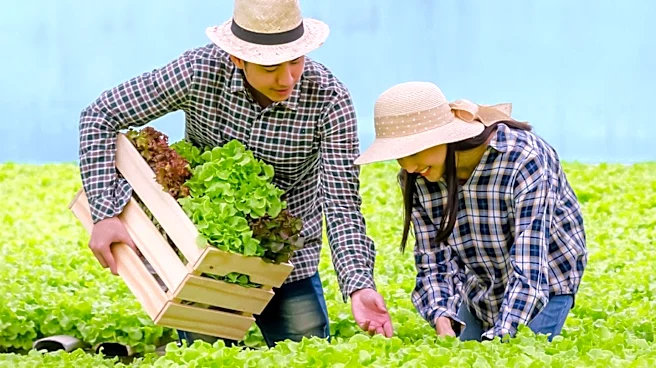
U.S. Representative Glenn Thompson (R-PA) is a co-sponsor of H.R. 9974, the 'Young Farmer Success Act,' a bipartisan House bill that aims to include farm and ranch work as eligible employment for the Public Service Loan Forgiveness (PSLF) program. The
bill, also introduced by Representatives Joe Courtney (D-CT), Monica De La Cruz (R-TX), and Nikki Budzinski (D-IL), has been referred to the House Committee on Education and Workforce. Currently, PSLF eligibility is tied to employment by government agencies or 501(c)(3) nonprofits, excluding farm and ranch work. The proposed legislation would amend the Higher Education Act to recognize full-time work as an employee or manager of a qualified farm or ranch as a public service job. A qualified operation would need at least $35,000 in gross revenue from agricultural product sales in 2026, with this threshold indexed to inflation in subsequent years. Borrowers would still be required to make 120 qualifying payments under an income-driven repayment plan.
Why It's Important?
This bill is significant for addressing the demographic challenges facing the U.S. agricultural sector. The average age of a U.S. farm producer reached 58.1 in 2022, and the country experienced a loss of 142,000 farms over the preceding five years. By extending PSLF eligibility to farm and ranch workers, the 'Young Farmer Success Act' seeks to incentivize younger individuals to enter and remain in agriculture, potentially serving as a crucial recruitment tool. Student loan debt can be a significant barrier for those considering careers in farming, an industry vital for national food production. Expanding PSLF could alleviate this financial burden, making agricultural careers more attractive and helping to ensure the future workforce of the farming industry. This initiative could also help sustain rural economies by supporting a younger generation of farmers and ranchers.
What's Next?
The 'Young Farmer Success Act' (H.R. 9974) must first advance out of the House Committee on Education and Workforce. Previous versions of this bill, such as the 2023 edition (H.R. 2728), have stalled in committee, indicating that securing sufficient co-sponsorship and political momentum will be critical for its progress. The bill's sponsors will need to garner broader support to move it forward. Another potential path for the legislation is its attachment to a larger legislative vehicle, such as a farm bill or a reauthorization of the Higher Education Act. Borrowers currently pursuing PSLF under existing rules are advised to continue certifying their employment, as the bill's passage and implementation are not guaranteed. The Education Department would also need to clarify how the new eligibility criteria, particularly for owner-operators, would be applied through rulemaking.
Beyond the Headlines
The 'Young Farmer Success Act' highlights a broader policy discussion about how to support essential but often financially challenging professions. By recognizing farm work as a public service, the bill implicitly acknowledges the societal value of agriculture beyond its economic output. This could lead to a re-evaluation of other sectors that provide critical public services but are not currently included in loan forgiveness programs. The bill also brings attention to the ongoing debate surrounding student loan reform and the effectiveness of programs like PSLF in achieving their intended goals. If successful, it could encourage a shift in how federal programs are designed to address workforce shortages in vital industries. The potential for increased participation of young people in farming could also foster innovation and sustainability practices within the agricultural sector, contributing to long-term environmental and economic benefits.