





What's Happening?
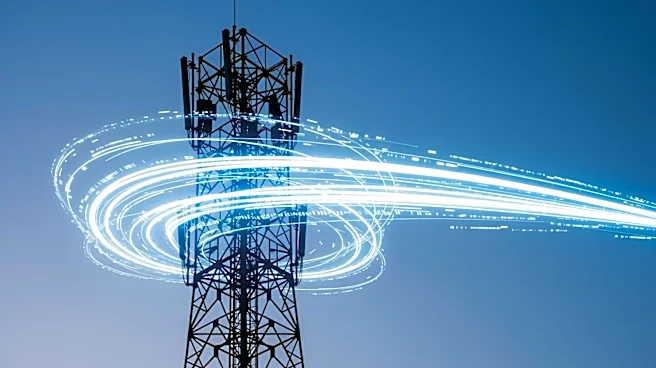
The Federal Communications Commission (FCC) has approved new regulations aimed at curbing illegal robocalls and enhancing the security of telecommunications networks against cyber threats. The new rules strengthen the 'Know Your Customer' (KYC) requirements
for telecom companies, mandating more rigorous verification of customer identities, including names, addresses, government IDs, and alternative phone numbers. This move addresses the issue of telecoms doing the 'bare minimum' in verifying callers, which has allowed illegal robocalling schemes to infiltrate U.S. phone networks. Additionally, the FCC has ended the blanket authorization for foreign companies on its covered entity list to operate within U.S. borders, targeting firms from countries like Russia and China. The commission also passed a measure to refuse recognition of overseas testing labs without reciprocity agreements with U.S.-based labs.
Why It's Important?
The FCC's decision to tighten KYC rules is significant in the ongoing battle against illegal robocalls, which have been a persistent nuisance and security threat to U.S. consumers. By enforcing stricter identity verification, the FCC aims to prevent bad actors from exploiting telecom networks. The move also reflects a broader strategy to protect national security by limiting the influence of foreign entities, particularly from adversarial countries, in the U.S. telecommunications infrastructure. This could lead to increased compliance costs for telecom companies but is expected to enhance the overall security and integrity of U.S. communications networks.
What's Next?
Telecom companies will need to adapt to these new regulations by implementing more robust customer verification processes. The FCC may also explore further enforcement mechanisms to ensure compliance, potentially tying penalties to the volume of illegal calls placed. As the FCC continues to refine its approach, telecoms will likely face increased scrutiny and pressure to enhance their security measures. The impact on international telecom relations, particularly with countries like China and Russia, could lead to diplomatic discussions or trade negotiations to address these security concerns.