



What's Happening?
An amateur astronomer, Joël Lapointe, has potentially discovered a meteorite impact crater in Quebec's Côte-Nord region, centered on Lake Marsal. Using Google Maps, Lapointe identified unusual terrain and reported it to Impact Earth, a crowdsourcing platform
for crater discoveries. Western planetary geologist Gordon Osinski visited the site in 2025 and provisionally confirmed the crater, naming it Uhackatik with approval from the Innu Council of Ekuanitshit. The crater is estimated to be 390 million years old and approximately 15 miles wide. Osinski's expedition revealed 'shock metamorphic effects' in the rocks, indicative of a meteorite impact. The findings, though not yet peer-reviewed, will be presented at the 88th Annual Meeting of the Meteoritical Society in Frankfurt, Germany.
Why It's Important?
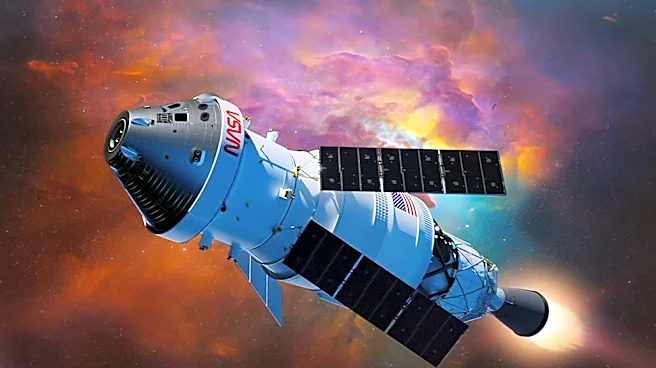
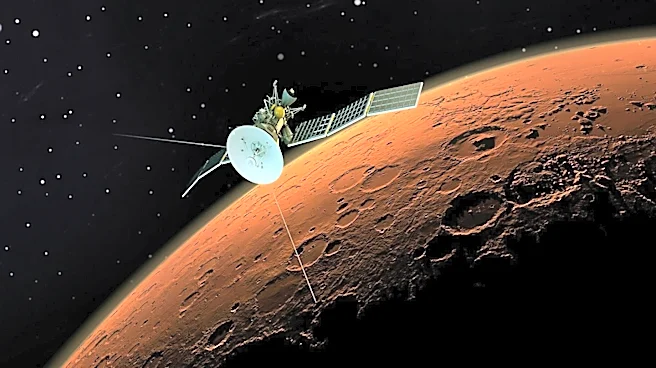
The discovery of the Uhackatik crater is significant for scientific research, as it provides valuable insights into meteorite impacts on Earth and other celestial bodies. Such craters are rare due to geological activity and erosion over time, making this find particularly precious. Understanding these impacts can help scientists draw parallels with similar features on the moon and Mars, enhancing our knowledge of planetary geology. The crater's study could also contribute to the training of astronauts, as similar Earth craters are used for preparing missions to the moon under NASA's Artemis program.
What's Next?
The research on the Uhackatik crater will be further developed and presented at an upcoming scientific meeting. This could lead to more detailed studies and potentially attract interest from the scientific community for further exploration. The findings may also influence future geological and astronomical research, providing a template for studying other potential impact sites.